
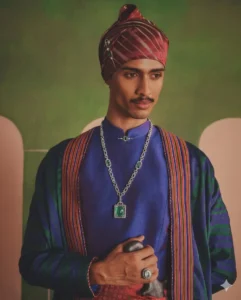
Table of contents
– Introduction: The Royal Legacy of the Deccan
– What makes Deccan inspired Jewellery Design unique?
– Iconic Motifs That Define the Deccan Look
– Why Deccan Inspired Jewellery Design Is Trending Again
– How to style Deccan inspired Jewellery Today
– The Future: Deccan on the Global Stage
– Conclusion: Wear Your History
Introduction: The Royal Legacy of the Deccan
Jewellery has always been more than adornment in India. It is memory, identity, and art passed down through generations. Among the richest jewellery traditions we have, Deccan inspired jewellery design stands out for its regal grandeur and cultural depth. Born in the courts of the Nizams of Hyderabad and shaped by Golconda’s legendary diamonds, this style carries 400 years of craftsmanship, symbolism, and storytelling. Today, at the Institute of Gems and Jewellery, we see a new wave of designers and students reviving Deccan aesthetics for a modern world that still craves meaning in every gem.
What makes Deccan inspired Jewellery Design unique?
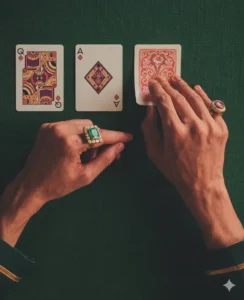
The Deccan region, covering present-day Telangana, parts of Maharashtra, Karnataka, and Andhra Pradesh, was a melting pot of Persian, Mughal, and South Indian influences. That mix shows up in the jewellery.
Polki and Uncut Diamonds: Golconda was once the only known source of the world’s finest diamonds. Deccan jewellers mastered the art of setting
raw, uncut diamonds in 22K gold using the kundan technique. The result feels organic, luminous, and distinctly royal.
Navratna and Symbolism: Nine-gem combinations, crescent motifs (chand ), mango (kairi ), and peacock patterns were not just decorative. They
carried astrological, spiritual, and status significance.
Lacquer Backing and Enamel: Many pieces were finished with meenakari on the reverse, so they looked beautiful even when flipped. It was jewellery meant to be heirloom, inside and out.
Scale and Layering: From satlada seven-strand necklaces to chintak chokers and jhumka earrings, Deccan style embraces volume. It was designed to complement rich fabrics and speak with quiet power.
Iconic Motifs That Define the Deccan Look
When students begin exploring Deccan inspired jewellery design, we encourage them to study these signature elements:
1. Satlada Haar: The seven-string pearl necklace, often finished with a pendant of uncut diamonds and coloured stones. Worn by Nizami nobility, it’s
now reimagined in lighter, wearable versions.
2. Chandbali Earrings: Crescent-shaped earrings edged with pearls and coloured stones. The Deccan version is usually heavier on gold and features enamel backing.
3. Vanki and Armlets: Inspired by South Indian temple jewellery, but made delicate with Mughal floral jaal work.
4. Guttapusalu: Necklaces with clusters of small pearls that look like “bunches of berries.” Originally from Andhra, they became a Deccan staple.
These are not just designs. They are blueprints of history you can wear.
Why Deccan Inspired Jewellery Design Is Trending Again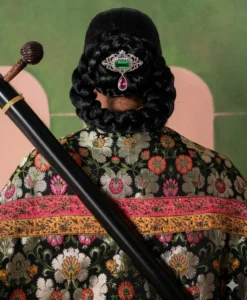
We live in a time when brides, collectors, and even everyday wearers want pieces with a story. Fast fashion can’t give that. Deccan design can. Here’s why it’s back in focus:
Celebrity Influence: When Nita Ambani wore the “Colossal Emerald and Diamond Necklace” at Anant Ambani’s pre-wedding Hastakshar, it reminded the world of Hyderabad’s love for oversized Colombian emeralds. The necklace, with its 865 carats of emeralds and diamond stringing, echoed Nizami proportions and set off a new demand for bold, coloured stone statements.
Red Carpet Revival: At the Oscars 2026, we saw Anne Hathaway in Bulgari’s Neoclassical Starlight necklace and Kylie Jenner in Lorraine Schwartz pear-shaped diamonds. While not strictly Deccan, the appetite for statement, heritage-scale pieces is global. Designers are now fusing those silhouettes with polki, pearls, and kundan to create Deccan inspired jewellery design for international clients.
Sustainable Heirloom Mindset : Millennials and Gen Z want “buy less, buy better.” A Deccan satlada or chandbali is made to last 100 years. That aligns with slow luxury.
How to style Deccan inspired Jewellery Today
You don’t need a royal wedding to wear it. Here’s how our alumni and faculty style it:
1. One Statement Rule: Pair a heavy satlada with a plain silk saree or a monochrome gown. Let the necklace do the talking.
2. Mix Metals: Deccan pieces were traditionally yellow gold, but platinum kundan is rising. Anne Hathaway’s platinum Neoclassical Starlight shows
how white metal can carry heritage cuts too.
3. Day-to-Night Deccan: A single chandbali with jeans and a kurta, or a polki ring stack with western wear. It’s all about proportion.
4. Modern Pairings: Try Lorraine Schwartz-style pear-shaped diamond drops with a Deccan chintak choker. High jewellery loves high contrast.
The Future: Deccan on the Global Stage
The next chapter for Deccan inspired jewellery design is global and gender fluid. We’re seeing brooches for grooms, polki cufflinks, and even unisex hasli necklaces on international runways. With lab-grown diamonds and ethical sourcing, Deccan aesthetics are also becoming more accessible to young designers. At the Institute of Gems and Jewellery, our mission is simple: keep the soul of Deccan alive while giving it a passport. Because true luxury isn’t about price. It’s about provenance, patience, and the human hand that made it.
Conclusion: Wear Your History
Deccan inspired jewellery design is not a trend. It’s a testimony. To the mines of Golconda, to the karigars of Hyderabad, and to everyone who believes jewellery should mean something. Whether you’re a student, collector, or bride-to-be, we invite you to study it, wear it, and eventually, add your own chapter to it.