
Gold chains are among the most versatile types of jewellery, suitable for everyday wear, special occasions, and traditional styling. They are available in different patterns, link structures, thicknesses, and finishes, making each design unique. Understanding the types of gold chains can help buyers choose a style that suits their preferences, outfits, and lifestyle.
From classic cable chains to bold rope and curb designs, each gold chain has its own appearance and construction. This guide explores popular gold chain types, their features, and what to consider when choosing one.
What Are the Different Types of Gold Chains?
Gold chains are created by connecting individual metal links in different patterns. Their appearance, flexibility, strength, and weight depend on the link design and manufacturing technique.
Here are some popular types of gold chains to know.
1. Cable Chain
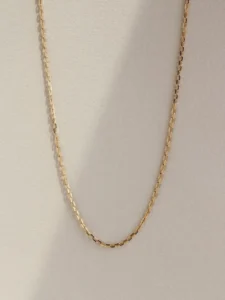
A cable chain is one of the most classic and widely recognised chain designs. It consists of simple, connected oval or round links arranged in a uniform pattern.
Key features:
- Simple and timeless appearance
- Available in delicate and heavier styles
- Suitable for pendants and everyday wear
- Easy to pair with other necklaces
Cable chains are a versatile choice for people who prefer understated jewellery.
2. Rope Chain
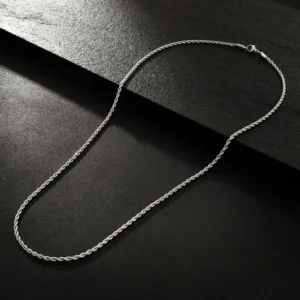
A rope chain features links twisted together to create a pattern that resembles a real rope. Its textured surface reflects light from multiple angles, giving the chain a distinctive shine.
Key features:
- Twisted, rope-like appearance
- Attractive texture and light reflection
- Available in thin and bold designs
- Can be worn alone or with suitable pendants
Rope chains are popular among people who prefer a noticeable chain design with a rich appearance.
3. Figaro Chain
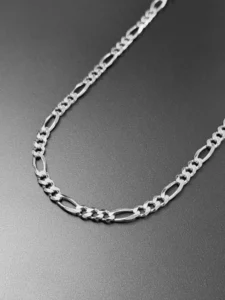
A Figaro chain traditionally features a repeating pattern of smaller round or oval links followed by a longer link. This alternating arrangement creates a distinctive design.
Key features:
- Recognisable alternating-link pattern
- Available in different thicknesses
- Suitable for both casual and statement styling
- Often worn without a pendant
Figaro chains are a good option for those who want something more distinctive than a basic cable chain.
4. Curb Chain
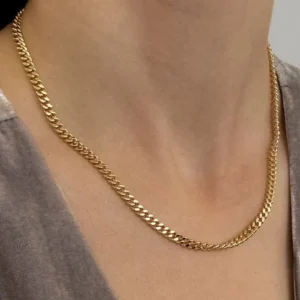
Curb chains consist of interconnected links that are twisted and flattened so they lie relatively close together. The links create a smooth, structured appearance.
Key features:
- Flat, closely connected links
- Available in delicate and bold variations
- Suitable for everyday and statement jewellery
- Can be worn alone or with selected pendants
The overall appearance of a curb chain changes considerably depending on the width and size of its links.
5. Box Chain
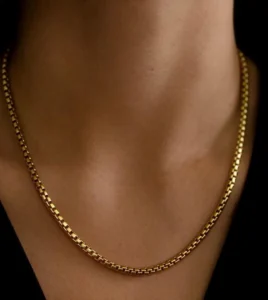
A box chain is made from links shaped and connected to create a series of small, square-like forms. From a distance, the chain often appears smooth and geometric.
Key features:
- Clean, geometric appearance
- Compact link structure
- Available in fine and heavier designs
- Suitable for many pendant styles, depending on thickness and construction
Box chains are an appealing choice for people who prefer modern jewellery with a neat, structured look.
6. Singapore Chain
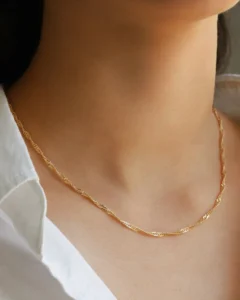
A Singapore chain features interwoven links that are twisted to create a delicate, spiral-like appearance. Its curved structure gives it an attractive sparkle as it moves.
Key features:
- Twisted and textured design
- Flexible appearance
- Often available in lightweight styles
- Suitable for delicate necklaces and selected pendants
Singapore chains are frequently chosen for their decorative look and graceful movement.
7. Snake Chain

A snake chain consists of closely connected plates or rings that form a smooth, rounded surface. Rather than showing clearly separated links, it has a continuous, scale-like appearance.
Key features:
- Smooth, sleek surface
- Modern and minimalist appearance
- Works well with certain pendant designs
- Requires careful handling to prevent kinks
Snake chains can look elegant on their own, but they should not be sharply bent or twisted because damage may be difficult to repair.
8. Herringbone Chain
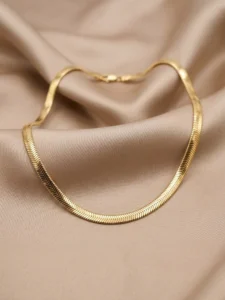
A herringbone chain is made from short, flat links arranged in a close, angled pattern. The links create a broad, reflective surface that lies flat against the skin.
Key features:
- Flat, polished appearance
- Distinctive reflective surface
- Available in different widths
- Often worn without a pendant
Herringbone chains are suitable for people who prefer a smooth, statement-making necklace. However, they need careful storage and handling because they can kink.
9. Wheat Chain

A wheat chain, sometimes called a spiga chain, is formed from interwoven links arranged in a braided pattern. It has a textured appearance and a more intricate construction than a basic cable chain.
Key features:
- Braided or woven appearance
- Detailed link pattern
- Available in different thicknesses
- Suitable for wearing alone or with compatible pendants
The intricate structure gives wheat chains a distinctive look that works with both classic and contemporary styles.
10. Ball Chain
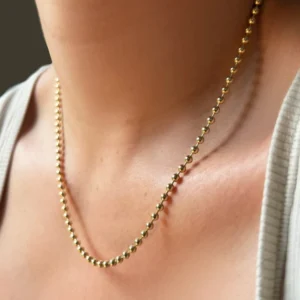
A ball chain consists of small, rounded metal beads connected by short links. The beads create a repeating pattern along the length of the chain.
Key features:
- Distinctive bead-like structure
- Contemporary appearance
- Available in different bead sizes
- Often selected for casual and modern jewellery designs
Gold ball chains offer an alternative to traditional linked chains for people who prefer a more unusual pattern.
How to Choose the Right Gold Chain
Choosing a gold chain involves more than selecting a design you like. Consider its intended use, construction, weight, and compatibility with any pendant.
1. Choose the Right Chain for Your Lifestyle
For regular wear, consider a chain that suits your daily activities and is comfortable to wear. Delicate chains can look subtle, while thicker designs may create a more noticeable style. No chain is completely resistant to damage, so construction and care matter.
2. Consider the Gold Purity
Gold chains may be available in different purities, including 14K, 18K and 22K gold.
- 14K gold: Contains 58.5% gold and is alloyed with other metals.
- 18K gold: Contains 75% gold.
- 22K gold: Contains approximately 91.6% gold.
Higher gold purity does not automatically mean a chain is stronger. Durability also depends on the alloy, link design, thickness, and manufacturing quality. Check the purity markings and applicable hallmarking details before purchasing.
3. Check the Chain’s Weight and Thickness
The weight and thickness influence a chain’s appearance, comfort, and price. A fine chain may be appropriate for a small pendant, while a heavier pendant may require a more substantial chain.
Always ensure that the chain and pendant are compatible. A very delicate chain may not be suitable for a heavy pendant, even if both pieces look attractive together.
4. Look at the Clasp and Construction
The clasp is an important part of a gold chain. Check that it closes securely and is appropriate for the chain’s weight and intended use. Examine the links for uniformity and look for visible damage, weak connections, or rough finishing.
5. Decide Whether You Want a Pendant
Not every chain is suitable for every pendant. Cable and box chains are commonly used with pendants, but the right choice depends on the pendant’s weight, bail size, and the chain’s construction.
Flat designs such as herringbone chains are often worn alone because some pendants can interfere with their shape or movement.
6. Match the Chain to Your Style
Choose a design that complements your wardrobe and personal preferences.
- For a simple look, consider a cable or fine box chain.
- For a textured design, explore rope or Singapore chains.
- For a bold appearance, consider a curb or Figaro chain.
- For a sleek, flat style, explore herringbone chains.
These are general styling suggestions; the best choice depends on the specific design and how you plan to wear it.
Which Gold Chain Is Best for Everyday Wear?
There is no single best gold chain for everyone. Cable, box, curb, and rope chains are common options for everyday styling, but their suitability depends on the chain’s thickness, link construction, clasp, and intended use.
For daily wear, choose a well-made chain that feels comfortable and suits your activities. Remove it when engaging in activities that could cause pulling, snagging, or impact, and inspect it periodically for wear.
How to Care for Gold Chains
Proper care helps preserve the appearance and condition of gold chains.
- Store chains separately to reduce tangling and scratching.
- Avoid pulling or sharply bending delicate chains.
- Remove jewellery before swimming, exercising, or using harsh cleaning chemicals.
- Clean according to the manufacturer’s recommendations.
- Have a jeweller inspect the clasp and links if you notice looseness or damage.
Flat chains, especially herringbone and snake styles, may need extra care to avoid kinks.
Final Thoughts
Understanding the different types of gold chains makes it easier to compare designs and choose jewellery that suits your style. Cable, rope, Figaro, curb, box, Singapore, snake, herringbone, wheat, and ball chains each offer a distinctive appearance.
When selecting a gold chain, consider the design, gold purity, weight, thickness, construction, and intended use. Learning about jewellery design and manufacturing also helps explain why different chain structures look and perform differently.
FAQs
What are the most popular types of gold chains?
Cable, rope, curb, Figaro, box, and Singapore chains are among the commonly recognised styles. Popularity varies by region, fashion trends, and personal preference.
Which gold chain is best for a pendant?
Cable and box chains are common pendant choices. The chain should be compatible with the pendant’s weight and bail size.
Which gold chain is best for everyday wear?
A well-made cable, box, curb, or rope chain may suit everyday use. Consider the chain’s thickness, construction, and your daily activities before choosing.
Is 22K gold better than 18K gold for chains?
Neither is automatically better for every purpose. 22K gold has a higher gold content, while 18K gold contains more alloying metals. Durability depends on the alloy and chain construction as well as gold purity.
How can I prevent my gold chain from tangling?
Store each chain separately, close the clasp before storage, and avoid placing several delicate chains together. A jewellery organiser with separate compartments can help.
Do different gold chain designs have different strengths?
Yes. Link structure, thickness, alloy, manufacturing quality, and clasp design all affect a chain’s performance. The chain’s appearance alone does not determine its strength.
Can I wear a gold chain every day?
Many gold chains can be worn regularly, but repeated friction, pulling, chemicals, and accidental impact may cause wear. Remove the chain when appropriate and check it periodically for damage.