
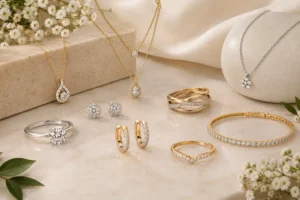
Diamonds have always held a special place in Indian jewellery, from engagement rings and wedding jewellery to elegant pieces designed for everyday wear. But the way Indians choose and wear diamond jewellery is changing.
In 2026, jewellery trends are moving towards versatility, personal expression, lighter designs, distinctive diamond cuts, and jewellery that can be worn beyond traditional occasions.
The rise of self-purchase, changing consumer preferences, and growing interest among younger buyers are also influencing the diamond jewellery market in India.
So, what are the top diamond jewellery trends in India 2026?
Let’s take a closer look.
1. Solitaire Diamond Jewellery
Solitaire jewellery continues to be one of the most recognisable diamond jewellery styles.
A solitaire focuses attention on a single prominent diamond, allowing its shape, cut, brilliance, and setting to become the centre of the design.
In India, solitaire diamond rings are seeing strong interest, particularly among younger consumers. Recent market reporting has highlighted increasing demand for solitaire rings among Indian buyers aged 28–40.
Solitaire designs are popular because they combine:
- Simplicity
- Elegance
- Timeless appeal
- Personal significance
- Versatility
Although traditionally associated with engagements, solitaire jewellery is increasingly being purchased for anniversaries, milestones, self-purchase, and other personal occasions.
2. Lightweight Diamond Jewellery
One of the most important jewellery trends in India is the movement towards lighter and more wearable designs.
High gold prices are encouraging many consumers to consider lighter-weight jewellery and studded designs as an alternative to heavier pieces. The World Gold Council reported a shift among mass-market Indian consumers towards lighter-weight, lower-carat and studded jewellery during 2026.
This has created opportunities for diamond jewellery that combines:
- Smaller gold weights
- Carefully selected diamonds
- Contemporary designs
- Everyday wearability
Lightweight diamond earrings, rings, pendants, bracelets, and necklaces can provide the sparkle of diamond jewellery while remaining practical for regular use.
3. Diamond Jewellery for Everyday Wear
Diamonds are increasingly moving beyond weddings and formal occasions.
Small diamond earrings, delicate pendants, slim rings, and lightweight bracelets can be styled with office wear, casual outfits, and everyday Indian clothing.
This trend reflects a broader change in jewellery consumption: people increasingly want pieces that can become part of their daily lifestyle rather than being worn only a few times a year.
A simple diamond necklace, for example, can work with a formal outfit during the day and a dinner look in the evening.
4. Fancy-Shaped Diamond Jewellery
Round brilliant diamonds remain classic, but alternative diamond shapes are attracting attention.
Popular shapes include:
- Oval
- Pear
- Emerald
- Marquise
- Princess
- Cushion
- Radiant
In 2026, there is also growing attention around more unconventional and angular diamond cuts. Recent international jewellery coverage has highlighted triangular, trapezoid, and other architectural shapes as designers look for distinctive alternatives to traditional silhouettes.
These shapes can give diamond jewellery a more contemporary identity.
5. Oval-Cut Diamond Jewellery
Oval diamonds have become particularly popular for engagement rings and fine jewellery.
Their elongated shape can create an elegant visual effect while retaining the brilliance associated with brilliant-cut diamonds.
Oval diamonds can be used in:
- Solitaire rings
- Halo rings
- Diamond earrings
- Pendant necklaces
- Three-stone designs
For buyers who want something different from a traditional round diamond without moving too far away from classic styling, the oval shape can be an attractive choice.
6. Pear-Shaped Diamond Jewellery
The pear shape combines characteristics of a round and marquise-style silhouette.
Its distinctive teardrop appearance gives jewellery a more expressive look.
Pear-shaped diamonds can be positioned in different ways, making them suitable for both traditional and contemporary jewellery designs.
They can be particularly striking in:
- Engagement rings
- Pendant necklaces
- Drop earrings
- Statement rings
7. Minimal Diamond Jewellery
Minimalism continues to influence diamond jewellery design.
Instead of large and elaborate pieces, many consumers are choosing subtle designs featuring small diamonds and clean silhouettes.
Examples include:
- Diamond studs
- Thin diamond bands
- Small solitaire pendants
- Delicate diamond bracelets
- Minimal diamond hoops
Minimal diamond jewellery can work particularly well for people who want luxury without an overly formal appearance.
8. Layered Diamond Necklaces
Layering has become an important part of contemporary jewellery styling.
Rather than wearing one large necklace, several delicate necklaces can be combined to create a personalised look.
Diamond pendants can be incorporated into layered combinations alongside fine gold chains.
For example:
Short chain + diamond pendant + longer delicate chain
This approach allows the wearer to create different looks using relatively simple jewellery pieces.
9. Diamond Earrings That Transition From Day to Evening
Versatility is becoming increasingly important in jewellery design.
Instead of having completely separate jewellery for office wear, casual occasions, and evening events, consumers are increasingly interested in pieces that can adapt across settings.
Diamond earrings are particularly suited to this trend.
Small studs or huggies can provide a subtle daytime look, while slightly larger drops or contemporary designs can work for evening occasions.
The focus is on AM-to-PM jewellery that can move easily from one part of the day to another. Recent Indian fashion coverage has specifically highlighted diamond earrings and layered chains as styles that work across celebrations and everyday wear.
10. Personalised Diamond Jewellery
Personalisation is becoming an increasingly important part of modern jewellery.
A diamond piece can become more meaningful when it incorporates:
- Initials
- Names
- Birth-inspired elements
- Meaningful symbols
- Special dates
- Custom designs
Personalised jewellery is particularly relevant to younger consumers who view jewellery not only as an accessory but also as a form of self-expression.
11. Self-Purchase Diamond Jewellery
Diamond jewellery is traditionally associated with proposals, weddings, anniversaries, and gifts.
That is changing.
Indian women are increasingly purchasing fine jewellery for themselves, including gold, diamonds, and lab-grown diamond pieces.
Self-purchase gives diamond jewellery a different meaning.
A diamond can represent:
- A career achievement
- Financial independence
- A personal milestone
- A birthday
- A promotion
- A personal reward
- Simply a love of jewellery
This shift is creating demand for jewellery that feels personal rather than ceremonial.
12. Lab-Grown Diamond Jewellery
Lab-grown diamonds are another important development in the diamond jewellery market.
They are diamonds produced using technological processes rather than formed naturally underground. They have the same basic chemical composition and crystal structure as natural diamonds, although their origin is different.
In India, lab-grown diamonds are gaining attention as younger consumers explore different options for engagement rings and fine jewellery.
When considering a lab-grown diamond, buyers should understand the distinction between natural and laboratory-grown diamonds and look for clear product disclosure and appropriate grading documentation.
India’s jewellery industry is also placing greater emphasis on transparent terminology and disclosure for natural diamonds, laboratory-grown diamonds, treated diamonds, and other diamond-related products.
13. Contemporary Diamond Jewellery With Traditional Inspiration
Indian jewellery has a rich design heritage.
In 2026, designers are continuing to reinterpret traditional motifs in more contemporary forms.
Instead of recreating an elaborate traditional necklace exactly, designers may take inspiration from:
- Floral patterns
- Paisley forms
- Temple motifs
- Geometric architecture
- Traditional Indian craftsmanship
and incorporate them into lighter diamond jewellery.
This creates a balance between heritage and modern design.
14. Mixed-Metal Diamond Jewellery
Using more than one metal colour can create contrast and visual interest.
White gold, yellow gold, and rose gold can be combined within a single jewellery design or styled together as part of a jewellery collection.
Mixed-metal diamond jewellery works particularly well for contemporary consumers who do not want to restrict themselves to one metal colour.
15. Sculptural and Unconventional Diamond Designs
Diamond jewellery is also becoming more experimental.
Instead of simply placing diamonds into traditional settings, contemporary designers are exploring unusual silhouettes, architectural forms, asymmetric designs, and unexpected proportions.
The growing interest in angular and unconventional diamond cuts is part of this larger movement toward jewellery with a stronger design identity.
These designs are especially appealing to consumers who want jewellery that feels individual rather than conventional.
Why Are Diamond Jewellery Trends Changing in India?
Several factors are influencing the Indian diamond jewellery market.
Changing Consumer Preferences
Younger consumers are looking for jewellery that reflects their personal style.
They are more likely to consider everyday jewellery, contemporary designs, self-purchase, and personalised pieces alongside traditional occasion jewellery.
Rising Gold Prices
The high gold-price environment in 2026 has influenced jewellery buying behaviour in India.
Consumers are increasingly considering lighter-weight pieces and studded jewellery to balance design preferences with budgets.
Growing Interest in Everyday Jewellery
Diamond jewellery is increasingly being designed for daily life rather than only weddings and formal occasions.
This is creating demand for smaller, lighter, and more versatile pieces.
Technology and Design Innovation
Modern jewellery design technology allows designers to experiment with shapes, proportions, settings, and production techniques.
CAD and digital modelling can help designers visualise complex designs before manufacturing.
Personal Expression
Jewellery is becoming increasingly connected to individual identity.
A piece does not necessarily need to represent a wedding or family tradition. It can simply represent the person wearing it.
How to Choose Diamond Jewellery in 2026
Following trends can be fun, but the best jewellery choice should also suit your personal preferences.
Consider the Diamond Shape
Choose a shape that matches your preferred aesthetic.
Round diamonds offer classic appeal, while oval, pear, marquise, emerald, cushion, and unconventional shapes can create different visual effects.
Think About the Occasion
Ask yourself whether the jewellery is intended for:
- Everyday wear
- Office use
- Engagement
- Wedding
- Festive occasions
- Gifting
- Self-purchase
Consider the Metal
Yellow gold, white gold, rose gold, and platinum can create very different appearances.
Look at the Setting
The setting affects both the appearance and practicality of a diamond jewellery piece.
Understand Diamond Quality
For diamond jewellery, buyers should understand the 4Cs — Cut, Colour, Clarity, and Carat Weight — while also considering the overall design and purpose of the jewellery.
Check Documentation and Disclosure
When buying diamonds, ask for appropriate product information and grading documentation.
For laboratory-grown diamonds in particular, clear disclosure of origin is important.
The Future of Diamond Jewellery in India
The Indian diamond jewellery market is entering an interesting phase.
Traditional jewellery remains important, but consumers are also exploring lightweight designs, everyday diamond jewellery, unconventional cuts, personalised pieces, self-purchase, and laboratory-grown diamonds.
India’s diamond jewellery market has strong growth potential, with industry reporting pointing to rising demand and increasing penetration beyond traditional metropolitan markets.
The future is therefore unlikely to belong to just one style.
Instead, the market will continue to offer a combination of:
Tradition + Technology + Personalisation + Everyday Wearability
Final Thoughts
The top diamond jewellery trends in India 2026 show how quickly jewellery preferences are evolving.
From classic solitaire rings and oval-cut diamonds to lightweight everyday pieces, layered necklaces, personalised designs, and unconventional diamond shapes, today’s jewellery offers more choice than ever.
At the same time, changing gold prices, younger consumers, self-purchase, and growing interest in lab-grown diamonds are influencing how people think about diamond jewellery.
The most important trend may therefore be choice.
Consumers are no longer limited to one definition of diamond jewellery. They can choose pieces based on their lifestyle, personality, occasion, budget, and individual sense of style.
And that is what makes the future of diamond jewellery in India so exciting.
FAQs
What are the top diamond jewellery trends in India in 2026?
Major trends include solitaire jewellery, lightweight diamond designs, everyday diamond jewellery, oval and pear-shaped diamonds, personalised pieces, layered necklaces, self-purchase jewellery, lab-grown diamonds, and unconventional diamond cuts.
Is diamond jewellery suitable for everyday wear?
Yes. Smaller diamond earrings, pendants, rings, bracelets, and lightweight necklaces can be designed specifically for everyday use.
Are solitaire diamonds trending in India?
Yes. Solitaire diamond rings have seen strong interest among Indian consumers, particularly younger buyers.
Are lab-grown diamonds becoming popular in India?
Yes. Lab-grown diamonds are gaining attention, particularly among younger consumers looking for different price and design options.
Which diamond shape is best?
There is no single best diamond shape. Round, oval, pear, marquise, emerald, cushion, and other shapes each create a different visual effect. The best choice depends on personal preference, jewellery design, and occasion.
What should I check before buying diamond jewellery?
Consider the diamond’s 4Cs, jewellery metal, setting, craftsmanship, certification or grading documentation, product disclosure, and overall design.