
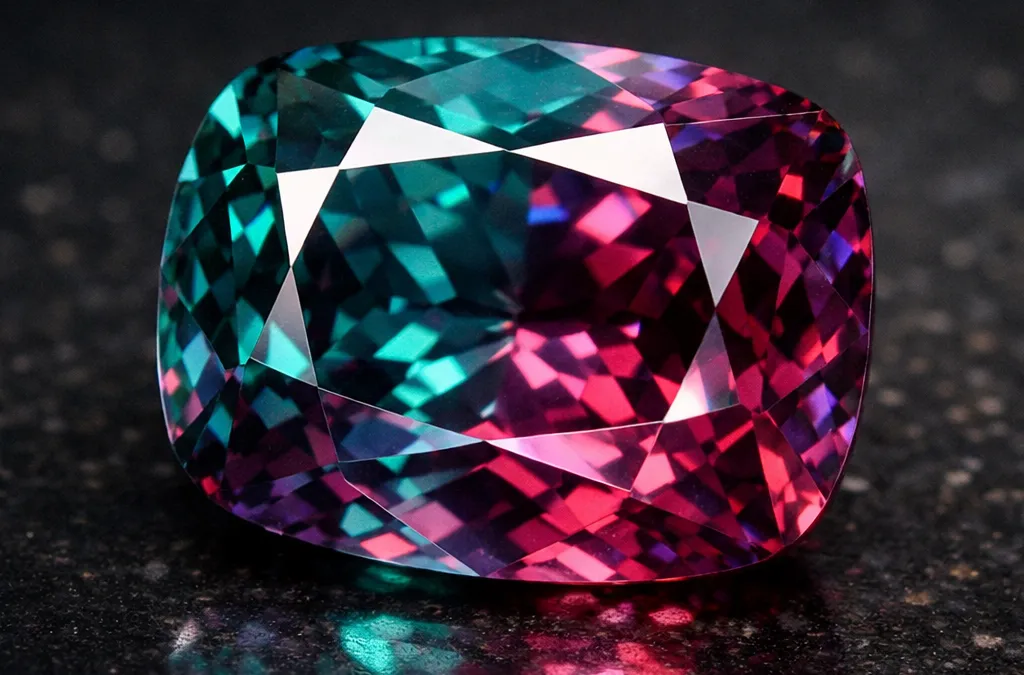
The Alexandrite gemstone is one of the world’s most fascinating and valuable gemstones, admired for its extraordinary ability to change colour. Often described as “Emerald by Day, Ruby by Night,” Alexandrite appears green or bluish-green in daylight and transforms into red or purplish-red under incandescent light. This rare optical phenomenon has made Alexandrite one of the most sought-after gemstones among collectors, jewellers, and gemmologists.
Discovered in the 19th century, Alexandrite has become a symbol of rarity, elegance, and scientific wonder. Its limited availability and unique optical properties continue to captivate gemstone enthusiasts around the world.
In this guide, we’ll explore the Alexandrite gemstone, including its history, formation, properties, value, jewellery uses, and why it is an essential gemstone for anyone interested in gemmology.
What Is Alexandrite?
Alexandrite is a rare variety of the mineral chrysoberyl. It is best known for its remarkable colour change effect, a characteristic that sets it apart from almost every other gemstone.
Natural Alexandrite is extremely rare, making it one of the most valuable coloured gemstones in the world. Fine-quality stones with a strong colour change are especially prized by collectors and luxury jewellery brands.
History of Alexandrite
Alexandrite was first discovered in the Ural Mountains of Russia in 1834. It was named after Tsar Alexander II, who later became Emperor of Russia.
The gemstone’s green and red colours resembled the military colours of Imperial Russia, contributing to its popularity and prestige. Today, natural Alexandrite is also found in countries such as Brazil, Sri Lanka, Tanzania, Madagascar, and India, although Russian Alexandrite remains especially famous.
Why Does Alexandrite Change Colour?
The most extraordinary feature of the Alexandrite gemstone is its ability to change colour under different light sources.
- Daylight or fluorescent light: Green to bluish-green
- Incandescent or warm light: Red, purplish-red, or raspberry red
This effect occurs because of the presence of chromium within the crystal structure. Chromium absorbs and reflects light differently depending on the light source, producing the gemstone’s dramatic colour shift.
A strong and distinct colour change is one of the most important indicators of high-quality Alexandrite.
Physical Properties of Alexandrite
Alexandrite has several characteristics that make it a valuable gemstone:
- Mineral Family: Chrysoberyl
- Colour: Green, bluish-green, red, purplish-red
- Hardness: 8.5 on the Mohs scale
- Crystal System: Orthorhombic
- Lustre: Vitreous
- Transparency: Transparent to translucent
Its excellent hardness makes Alexandrite suitable for rings, pendants, earrings, and other fine jewellery.
Where Is Alexandrite Found?
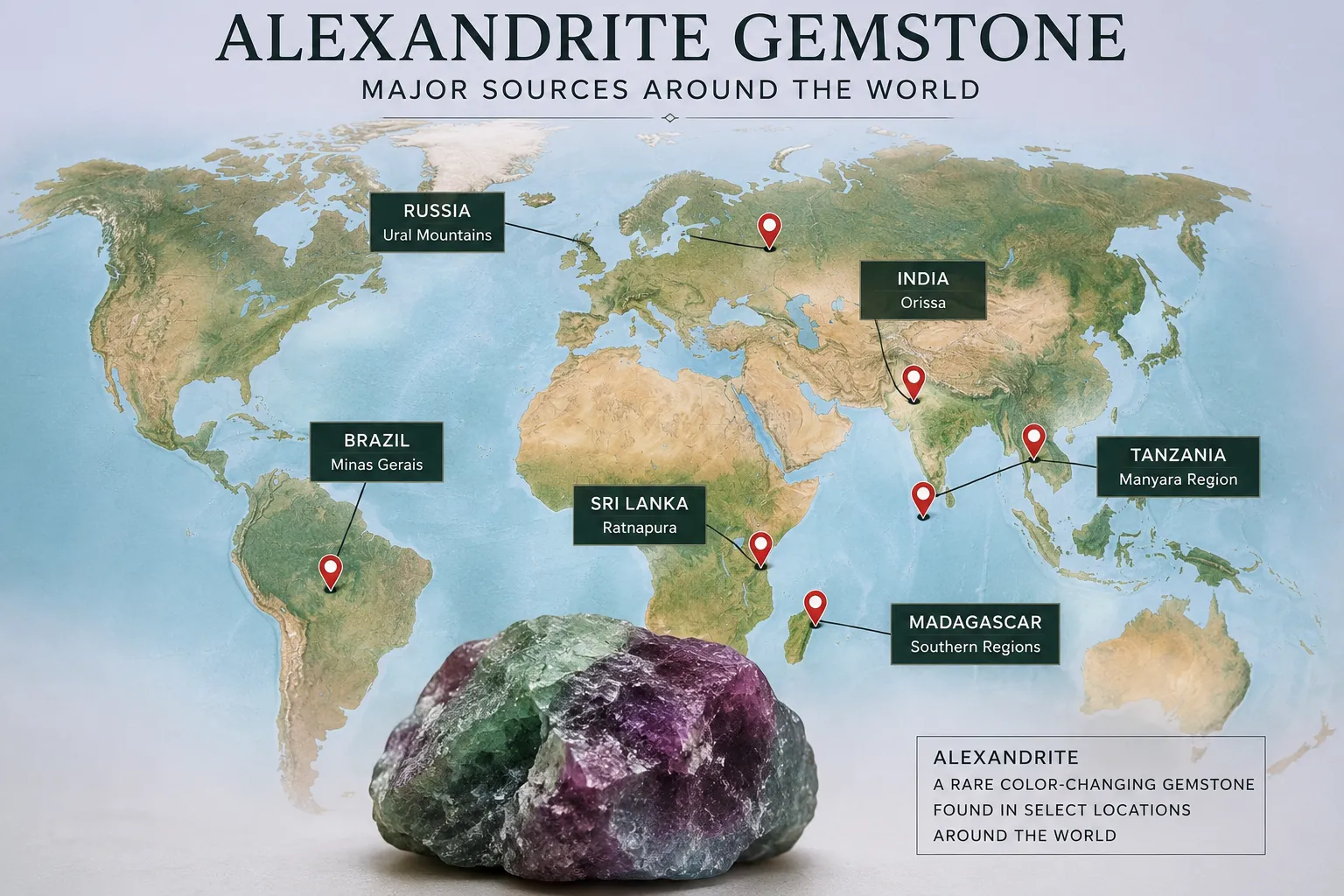
Although first discovered in Russia, Alexandrite is now mined in a few select locations around the world.
Major sources include:
- Russia
- Brazil
- Sri Lanka
- Tanzania
- Madagascar
- India
Because high-quality deposits are limited, natural Alexandrite remains one of the rarest gemstones on the market.
What Determines the Value of Alexandrite?
The value of an Alexandrite gemstone depends on several factors:
Colour Change
The stronger the transition from green to red, the more valuable the gemstone.
Colour Quality
Vivid, saturated colours are preferred over pale or dull tones.
Clarity
Eye-clean stones with minimal inclusions are highly desirable.
Cut
A well-executed cut enhances brilliance and showcases the colour change effect.
Carat Weight
Large natural Alexandrite gemstones are exceptionally rare and command premium prices.
Alexandrite in Jewellery
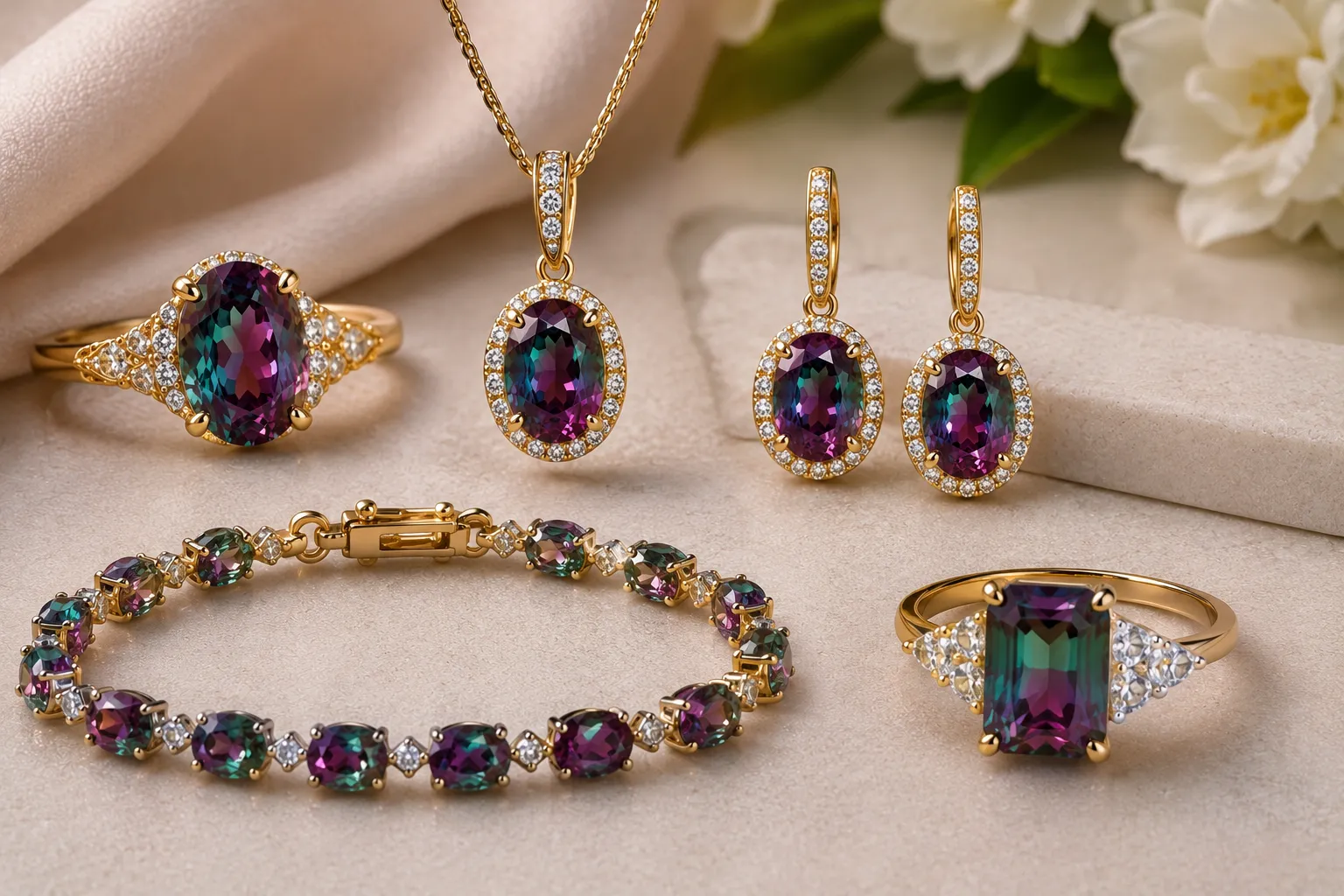
Alexandrite is a favourite choice for luxury jewellery because of its rarity and unique appearance.
It is commonly used in:
- Engagement rings
- Wedding bands
- Pendants
- Earrings
- Bracelets
- Fine gemstone necklaces
Its ability to display different colours makes every piece of Alexandrite jewellery distinctive and elegant.
How Gemmologists Identify Alexandrite
Professional gemmologists use advanced techniques to identify Alexandrite and distinguish it from imitations or synthetic stones.
Common methods include:
- Refractive Index (RI)
- Specific Gravity (SG)
- Magnification
- Pleochroism observation
- Spectroscope analysis
- Gemmological microscope examination
The colour change effect is carefully evaluated under different light sources, making it one of the key identification features.
Caring for Alexandrite Jewellery
Although Alexandrite is durable, proper care helps preserve its beauty.
- Clean with warm water and mild soap.
- Use a soft cloth or brush.
- Avoid harsh chemicals.
- Store separately from other jewellery to prevent scratches.
- Have valuable pieces checked periodically by a professional jeweller.
With proper care, Alexandrite jewellery can be enjoyed for generations.
Learn Gemmology at the Institute of Gems and Jewellery
If rare gemstones like Alexandrite inspire you, a career in gemmology could be the perfect path.
At the Institute of Gems and Jewellery, our Gemmology Course provides students with comprehensive knowledge of gemstones, diamonds, and modern gem-testing techniques.
Students receive practical training in:
- Gemstone identification
- Diamond grading
- Coloured gemstone analysis
- Gem testing instruments
- Gemstone certification
- Industry-standard evaluation techniques
Hands-on laboratory sessions and expert guidance prepare students for rewarding careers in the gems and jewellery industry.
Whether your goal is to become a gemmologist, diamond grader, jewellery consultant, or gemstone expert, our courses provide the foundation needed to succeed.
Career Opportunities in Gemmology
A professional qualification in gemmology can lead to careers such as:
- Gemmologist
- Diamond Grader
- Jewellery Consultant
- Gemstone Appraiser
- Quality Control Executive
- Jewellery Buyer
- Laboratory Professional
- Jewellery Retail Specialist
As demand for certified gemstones continues to grow, trained gemmologists remain highly valued in the global jewellery market.
Conclusion
The Alexandrite gemstone is one of nature’s most extraordinary creations. Its rare colour changing ability, exceptional beauty, and limited availability make it one of the most valuable gemstones in the world.
For gemstone enthusiasts and aspiring professionals alike, Alexandrite offers a fascinating insight into the science of gemmology. Understanding its properties, identification methods, and value helps deepen appreciation for this remarkable gemstone.
At the Institute of Gems and Jewellery, our Gemmology Course combines theoretical knowledge with practical training, helping students develop the expertise needed for successful careers in the gems and jewellery industry.
Frequently Asked Questions
1. Why is Alexandrite so valuable?
Alexandrite is valuable because it is rare, especially in larger sizes, and displays a remarkable color change from green in daylight to red under warm light.
2. What causes Alexandrite to change colour?
The colour change is caused by the presence of chromium in the crystal structure, which absorbs and reflects light differently depending on the light source.
3. Is Alexandrite suitable for everyday jewellery?
Yes. With a Mohs hardness of 8.5, Alexandrite is durable enough for everyday wear when properly cared for.
4. Can I learn gemstone identification professionally?
Yes. The Institute of Gems and Jewellery offers a Gemmology Course that provides practical training in gemstone identification, grading, certification, and laboratory testing.