
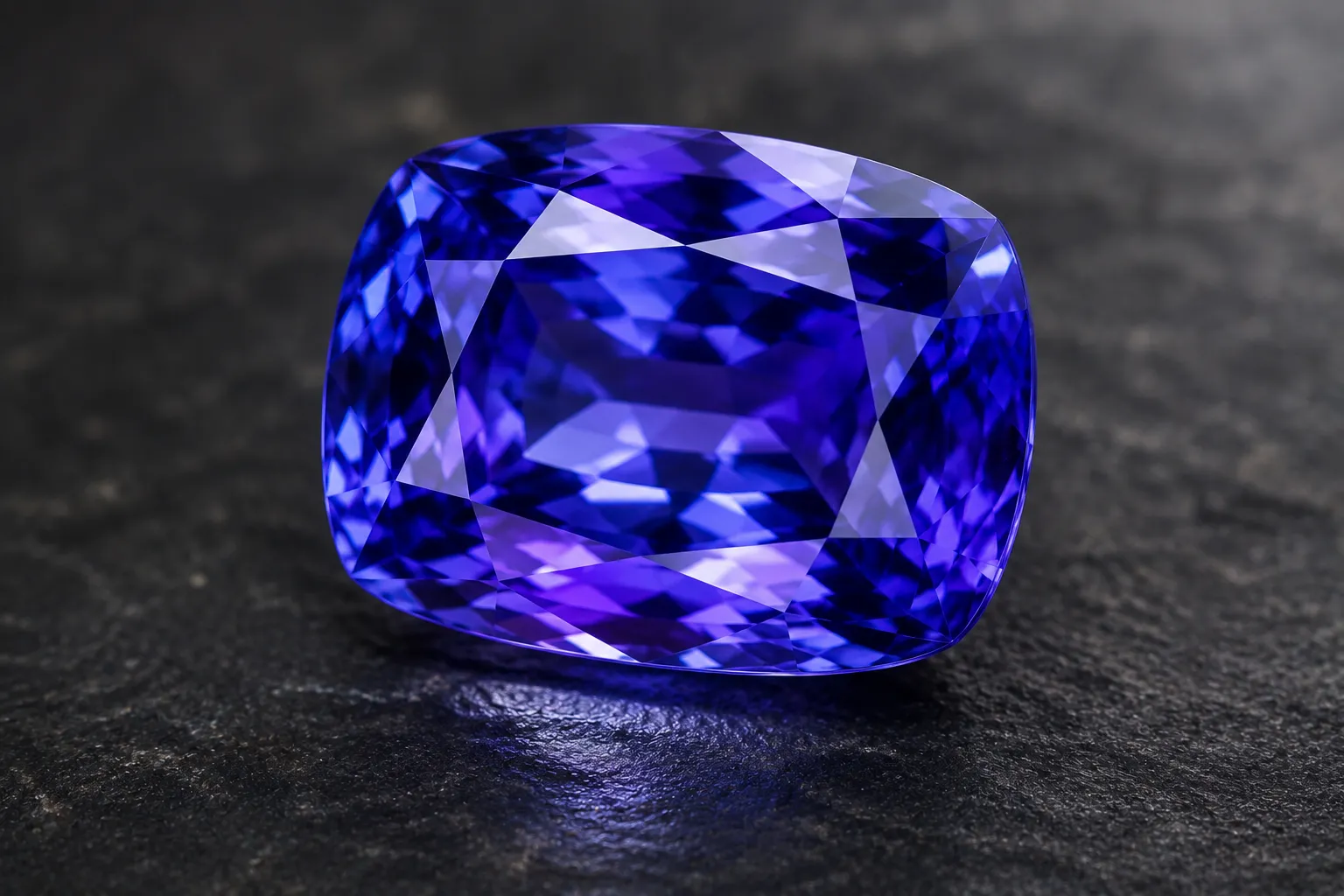
Among the world’s most extraordinary gemstones, the Tanzanite gemstone holds a special place for its breathtaking blue-violet color and remarkable rarity. Unlike many gemstones that are found in several countries, Tanzanite is discovered in only one location on Earth, making it one of the most exclusive gemstones in the jewellery industry.
Since its discovery in the late 1960s, Tanzanite has become highly sought after by collectors, jewellery designers, and gemstone enthusiasts. Its striking appearance, limited availability, and fascinating geological history have made it a symbol of luxury and elegance.
In this guide, we’ll explore everything you need to know about the Tanzanite gemstone, including its origin, unique characteristics, value, uses in jewellery, and why it is an important gemstone in the field of gemmology.
What Is a Tanzanite Gemstone?
Tanzanite is the blue to violet variety of the mineral zoisite. It is admired for its vivid colors, exceptional brilliance, and rarity.
The gemstone was first discovered in 1967 in the Merelani Hills near Mount Kilimanjaro in northern Tanzania. To this day, this remains the only known commercial source of Tanzanite, making it significantly rarer than many other gemstones.
Because of its limited origin, experts believe that Tanzanite deposits may eventually become exhausted, adding to its value and desirability.
How Is Tanzanite Formed?
The Tanzanite gemstone was formed millions of years ago under unique geological conditions.
Heat, pressure, and mineral-rich environments deep within the Earth’s crust transformed the mineral zoisite into the beautiful blue-violet gemstone we know today.
The combination of these natural processes is extremely rare, which explains why Tanzanite is found in only one small region of the world.
Why Does Tanzanite Have a Blue-Violet Color?
One of the most captivating features of the Tanzanite gemstone is its stunning blue-violet color.
This color is primarily caused by the presence of vanadium, a trace element that becomes part of the crystal during its formation.
Depending on the viewing angle and lighting conditions, Tanzanite can display shades of:
- Deep royal blue
- Violet
- Bluish-purple
This unique ability to show different colors makes Tanzanite truly exceptional.
The Unique Optical Property of Tanzanite
Tanzanite is famous for a phenomenon known as pleochroism.
Pleochroism means the gemstone displays different colors when viewed from different directions.
A high-quality Tanzanite may reveal:
- Blue
- Violet
- Burgundy or reddish tones
This optical characteristic helps distinguish Tanzanite from many other gemstones and is one of the reasons gemmologists find it so fascinating.
Physical Properties of Tanzanite
The Tanzanite gemstone has several distinctive characteristics:
- Mineral Family: Zoisite
- Color: Blue, violet, bluish-purple
- Hardness: 6 to 7 on the Mohs scale
- Crystal System: Orthorhombic
- Lustre: Vitreous
- Transparency: Transparent
Although beautiful, Tanzanite is softer than sapphires and diamonds, so it requires careful handling.
What Determines the Value of Tanzanite?
Several factors influence the value of a Tanzanite gemstone.
Color
Deep, vivid blue with a slight violet hue is considered the most desirable.
Clarity
High-quality Tanzanite is eye-clean, meaning it has few or no visible inclusions.
Cut
A well-cut gemstone enhances brilliance and highlights its pleochroic colors.
Carat Weight
Large Tanzanite gemstones are much rarer and often command higher prices.
Origin
Because all commercial Tanzanite comes from Tanzania, origin plays an important role in its uniqueness.
Tanzanite in Jewellery
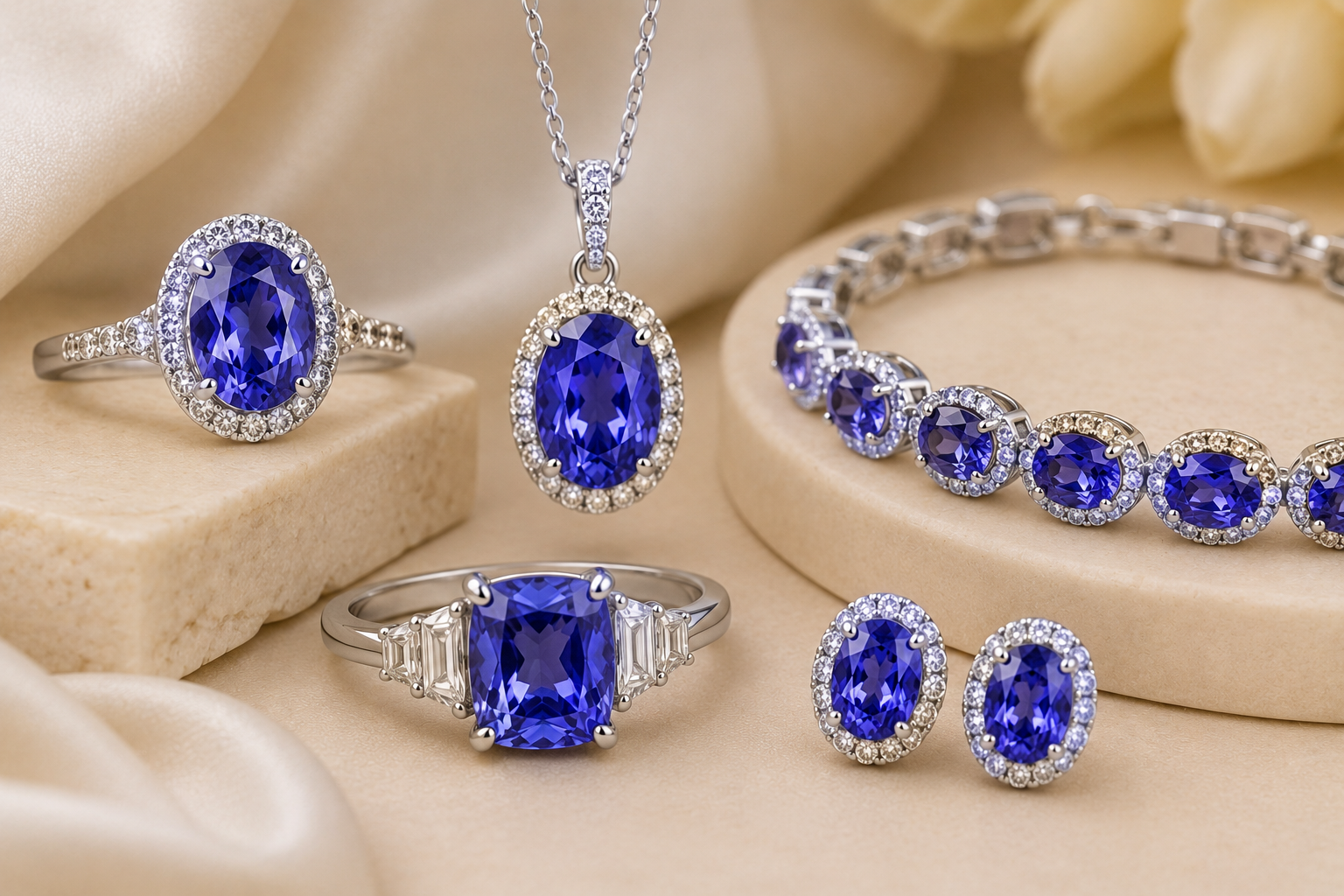
The beauty of Tanzanite makes it a favorite among jewellery designers.
It is commonly used in:
- Engagement rings
- Pendants
- Earrings
- Bracelets
- Luxury necklaces
- Cocktail rings
Its vibrant color pairs beautifully with white gold, yellow gold, platinum, and diamonds.
How Gemmologists Identify Tanzanite
Professional gemmologists use several methods to identify Tanzanite accurately.
These include:
- Refractive Index (RI)
- Specific Gravity (SG)
- Pleochroism observation
- Magnification
- Spectroscope analysis
- Polariscopes
- Gemmological microscopes
These techniques help distinguish natural Tanzanite from imitations and identify any treatments.
Learn Gemmology at the Institute of Gems and Jewellery
If gemstones like Tanzanite inspire you, a career in gemmology could be the perfect path.
At the Institute of Gems and Jewellery, our Gemmology Course provides students with the knowledge and practical skills needed to identify, evaluate, and understand precious and semi-precious gemstones.
Our training includes:
- Gemstone identification
- Diamond grading
- Colored gemstone analysis
- Gem testing instruments
- Gemstone certification
- Industry-standard evaluation techniques
Through hands-on practical sessions and guidance from experienced faculty, students gain the confidence and expertise required for successful careers in the gems and jewellery industry.
Whether you dream of becoming a gemologist, diamond grader, jewellery consultant, or gemstone expert, professional education can help turn your passion into a rewarding career.
Career Opportunities in Gemmology
Studying gemmology opens doors to a wide range of careers, including:
- Gemologist
- Diamond Grader
- Jewellery Consultant
- Gemstone Appraiser
- Quality Control Executive
- Jewellery Buyer
- Laboratory Professional
- Jewellery Retail Specialist
With the growing global demand for certified gemstones, skilled gemmologists continue to be highly valued by the jewellery industry.
Conclusion
The Tanzanite gemstone is one of nature’s most remarkable treasures. Its mesmerizing blue-violet color, exceptional rarity, and unique pleochroic properties make it one of the most desirable gemstones in the world.
Beyond its beauty, Tanzanite plays an important role in gemmology, helping professionals understand gemstone identification, optical properties, and valuation. For anyone passionate about gemstones, learning about Tanzanite is an exciting step into the fascinating world of gems.
At the Institute of Gems and Jewellery, students gain practical knowledge and industry-relevant skills through our Gemmology Course, preparing them for successful careers in the ever-evolving gems and jewellery sector.
FAQs
1. Why is Tanzanite so rare?
Tanzanite is found only in the Merelani Hills of northern Tanzania, making it one of the rarest commercially mined gemstones in the world.
2. What gives Tanzanite its blue-violet color?
The gemstone’s distinctive color is primarily caused by trace amounts of vanadium within its crystal structure.
3. Is Tanzanite suitable for everyday jewellery?
Yes, but because it has a Mohs hardness of 6–7, it should be worn with care and protected from hard impacts.
4. Can I learn gemstone identification professionally?
Yes. The Institute of Gems and Jewellery offers a comprehensive Gemmology Course that teaches gemstone identification, grading, certification, and practical laboratory techniques.