
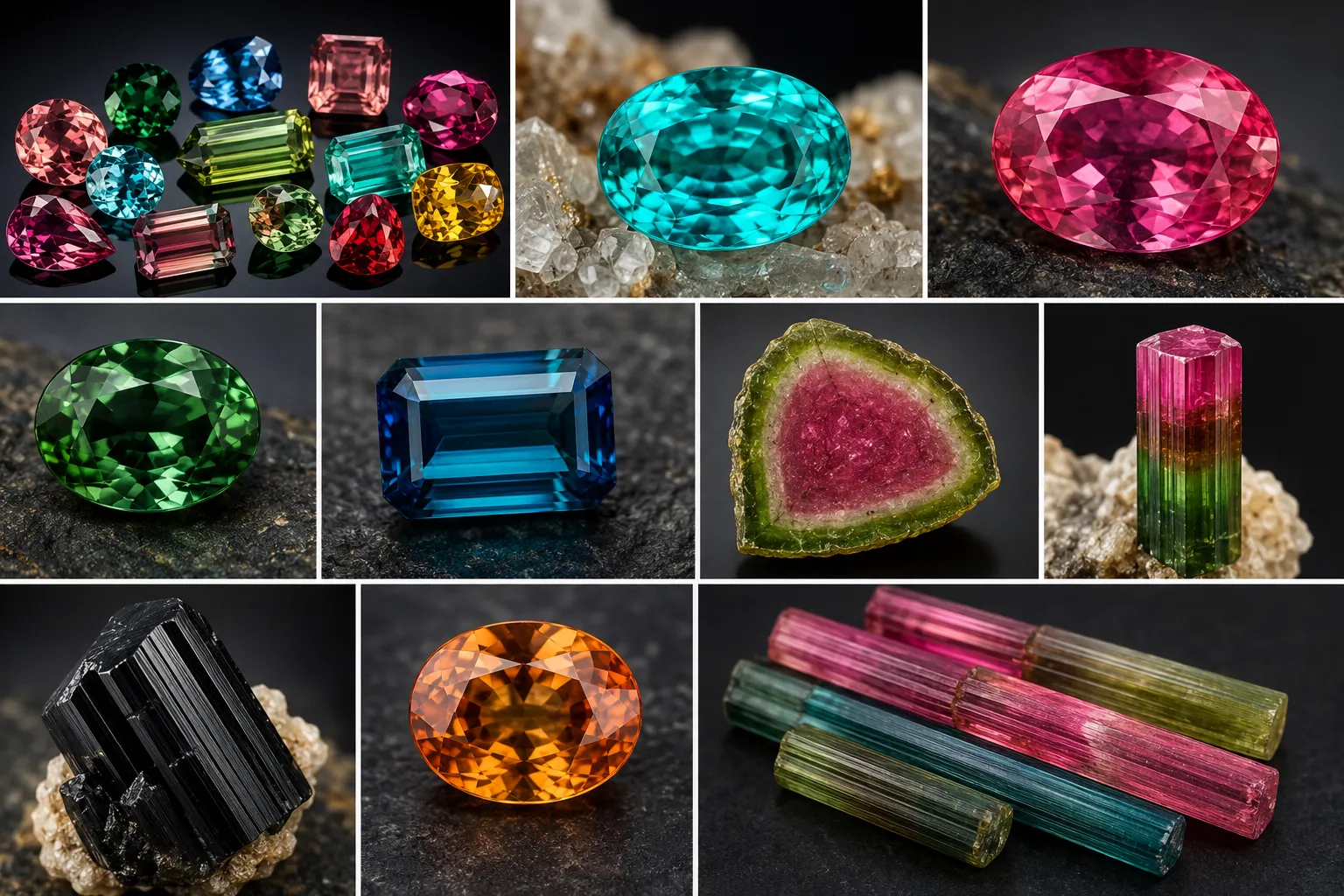
Among the world’s most fascinating gemstones, the Tourmaline gemstone stands out for its extraordinary variety of colors. Often referred to as the “Rainbow Gemstone,” Tourmaline is admired by jewellery lovers, gemmologists, and designers for its beauty, durability, and remarkable diversity.
Unlike many gemstones that occur in only one or two colors, Tourmaline can be found in almost every shade imaginable, including green, pink, blue, red, yellow, black, and even multicolored varieties. This incredible range of colors has made it one of the most sought-after gemstones in the jewellery industry.
In this guide, we’ll explore everything you need to know about the Tourmaline gemstone, including how it forms, why it comes in so many colors, its different varieties, value, uses in jewellery, and why it is an important gemstone in gemmology.
What Is a Tourmaline Gemstone?
Tourmaline is a semi-precious gemstone belonging to a complex group of boron silicate minerals. It forms deep within the Earth’s crust under high temperatures and pressures over millions of years.
Because of its unique chemical composition, Tourmaline can incorporate different trace elements during its formation. These trace elements create the gemstone’s incredible range of colors, making each Tourmaline unique.
Tourmaline is highly valued not only for its beauty but also for its versatility, making it a favorite among jewellery designers and gemstone collectors.
Why Does Tourmaline Come in So Many Colors?
One of the most interesting features of the Tourmaline gemstone is its remarkable color diversity.
Different trace elements influence its appearance:
Chromium and Vanadium
These elements create vibrant green Tourmalines, often called Verdelite.
Manganese
Manganese produces beautiful pink and red Tourmalines.
The deep red variety is known as Rubellite.
Iron
Iron is responsible for dark green, blue, and black Tourmalines.
Copper
Copper creates the spectacular neon blue and blue-green Paraíba Tourmaline, one of the world’s rarest and most valuable gemstones.
The presence of these trace elements makes every Tourmaline gemstone unique.
Popular Varieties of Tourmaline
Paraíba Tourmaline
Perhaps the most famous variety, Paraíba Tourmaline is known for its vivid neon blue or blue-green color.
Discovered in Brazil during the late 1980s, this gemstone is extremely rare and can command exceptionally high prices due to its brilliance and limited availability.
Rubellite
Rubellite is the red to pink variety of Tourmaline.
Unlike many pink gemstones, Rubellite maintains its vibrant color under different lighting conditions, making it highly desirable in fine jewellery.
Verdelite
Verdelite refers to green Tourmaline.
Its refreshing green color makes it a popular alternative to emeralds for those seeking durable and affordable gemstone jewellery.
Indicolite
Indicolite is the rare blue variety of Tourmaline.
Its rich blue shades are admired by gemstone collectors worldwide.
Watermelon Tourmaline
One of the most fascinating varieties, Watermelon Tourmaline displays a pink center surrounded by a green outer layer, resembling a slice of watermelon.
Its natural color combination makes it one of the most recognizable gemstones.
Black Tourmaline
Also known as Schorl, Black Tourmaline is the most common variety.
It is widely used in jewellery and decorative items because of its striking appearance and durability.
Physical Properties of Tourmaline
Some important characteristics of the Tourmaline gemstone include:
- Mineral Group: Boron Silicate
- Hardness: 7–7.5 on the Mohs scale
- Crystal System: Trigonal
- Lustre: Vitreous (glass-like)
- Transparency: Transparent to opaque
- Birthstone: October
Its hardness makes Tourmaline suitable for rings, earrings, necklaces, pendants, and bracelets.
Where Is Tourmaline Found?
Tourmaline is mined in several countries around the world.
Major sources include:
- Brazil
- Mozambique
- Nigeria
- Madagascar
- Afghanistan
- Pakistan
- Sri Lanka
- Tanzania
- United States
Brazil remains one of the most famous sources of high-quality Tourmaline, particularly the rare Paraíba variety.
Tourmaline in Jewellery
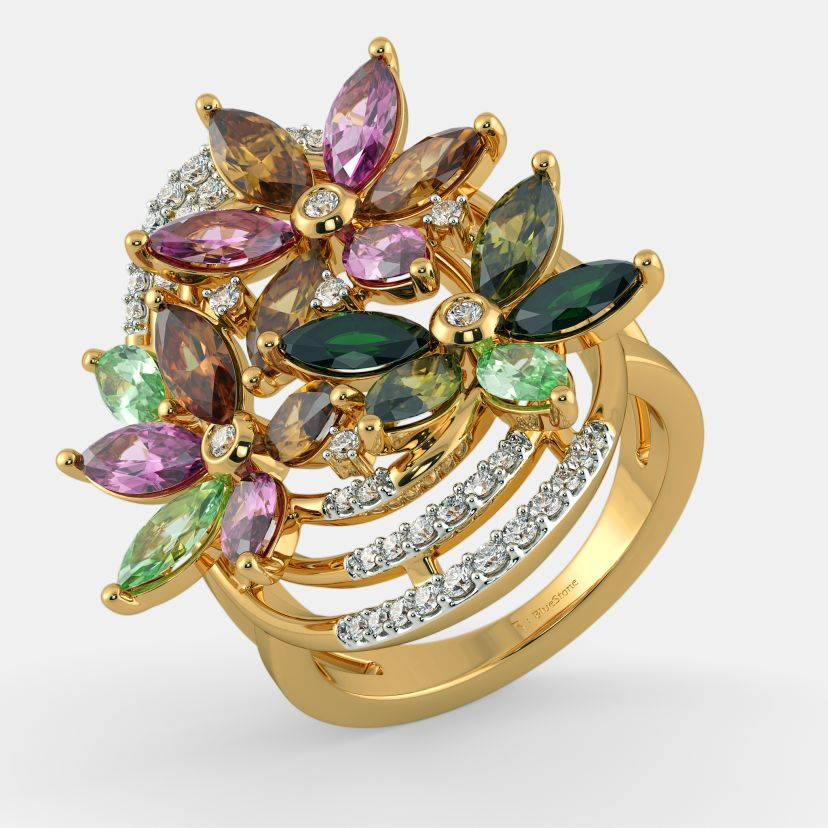
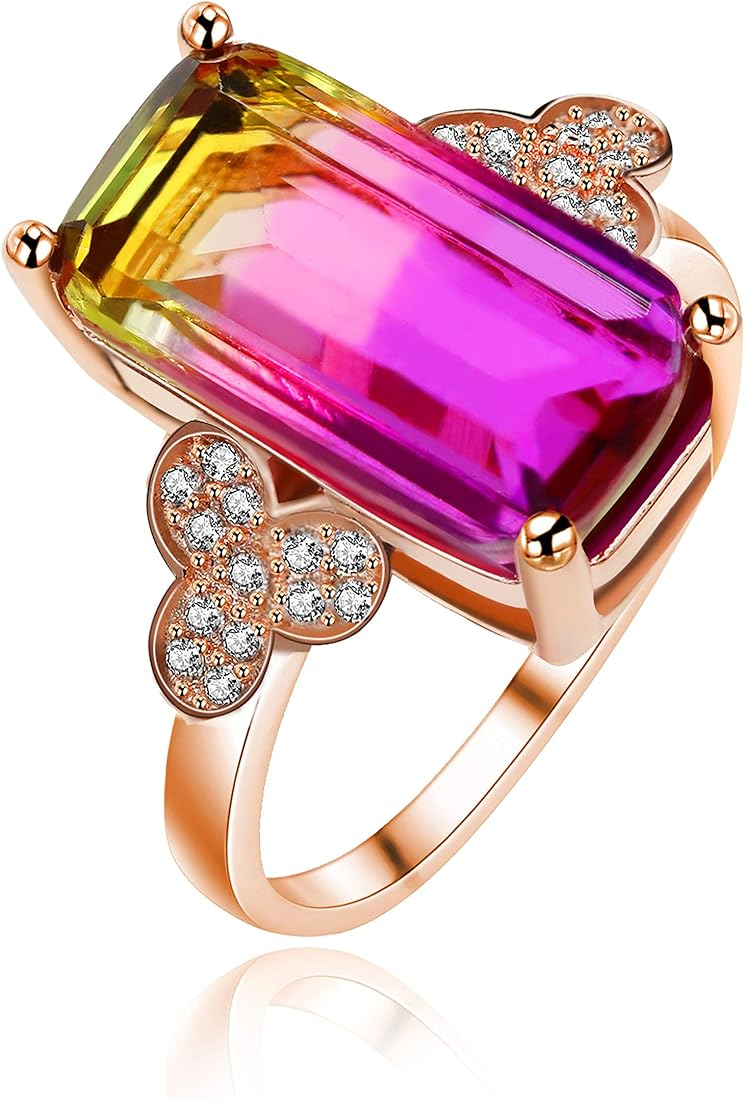
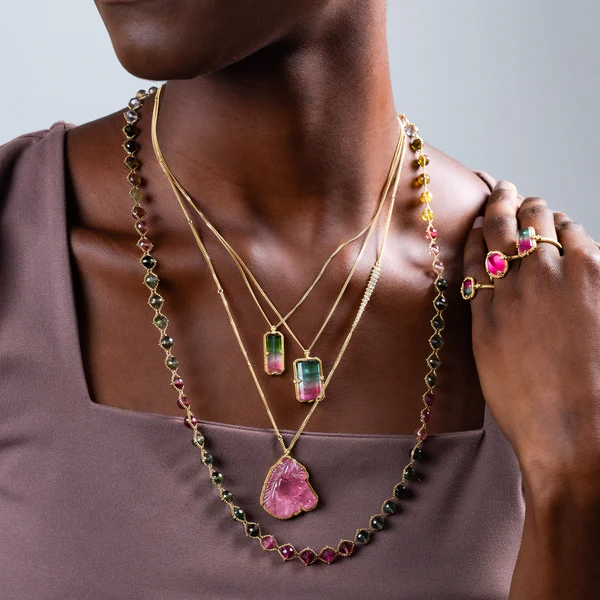
Jewellery designers appreciate Tourmaline because it offers endless creative possibilities.
Its wide range of colors allows designers to create unique jewellery collections that appeal to different tastes and styles.
Tourmaline is commonly used in:
- Engagement rings
- Fashion rings
- Necklaces
- Pendants
- Earrings
- Bracelets
- Luxury designer jewellery
Its durability also makes it suitable for everyday wear.
How Gemmologists Identify Tourmaline
For professional gemmologists, identifying Tourmaline involves much more than observing its color.
Experts examine:
- Refractive Index (RI)
- Specific Gravity (SG)
- Crystal structure
- Pleochroism
- Inclusions
- Optical properties
- Spectroscope readings
Modern gemmological laboratories also use advanced testing equipment to distinguish natural Tourmaline from imitations or treated stones.
What Determines the Value of Tourmaline?
Several factors influence the value of a Tourmaline gemstone.
Colour
Bright, vivid colors are generally the most valuable.
Clarity
Transparent stones with minimal inclusions command higher prices.
Cut
A well-cut gemstone enhances brilliance and overall appearance.
Carat Weight
Larger gemstones are typically more valuable, especially in rare varieties.
Origin
Certain origins, such as Brazilian Paraíba Tourmaline, are highly prized by collectors.
Learn Gemmology at the Institute of Gems and Jewellery
If gemstones like Tourmaline inspire you, a career in gemmology could be the perfect choice.
At the Institute of Gems and Jewellery, our Gemmology Course equips students with the knowledge and practical skills needed to identify, evaluate, and understand gemstones used in the jewellery industry.
Students gain hands-on experience in:
- Gemstone identification
- Diamond grading
- Colored gemstone analysis
- Gem testing instruments
- Gemstone certification
- Industry-standard evaluation techniques
With expert guidance and practical laboratory training, students are prepared for rewarding careers in the gems and jewellery industry.
Career Opportunities in Gemmology
A professional education in gemmology opens the door to exciting career opportunities such as:
- Gemologist
- Diamond Grader
- Jewellery Consultant
- Gemstone Appraiser
- Quality Control Executive
- Jewellery Buyer
- Laboratory Professional
- Jewellery Retail Specialist
As the global jewellery market continues to grow, the demand for skilled gemmologists remains strong.
Conclusion
The Tourmaline gemstone is truly one of nature’s most remarkable creations. Its incredible variety of colors, impressive durability, and fascinating formation process make it a favorite among jewellery designers, collectors, and gemmologists alike.
Whether you’re drawn to the vibrant glow of Paraíba Tourmaline, the elegance of Rubellite, or the unique beauty of Watermelon Tourmaline, each variety tells a story shaped by millions of years of geological processes.
For anyone passionate about gemstones and jewellery, studying gemmology provides the knowledge needed to understand and appreciate these natural treasures. At the Institute of Gems and Jewellery, students gain industry-relevant skills through practical training, preparing them for successful careers in the dynamic world of gems and jewellery.
FAQs
Is Tourmaline a precious or semi-precious gemstone?
Tourmaline is traditionally classified as a semi-precious gemstone, but rare varieties like Paraíba Tourmaline are among the most valuable colored gemstones in the world.
Why does Tourmaline come in so many colors?
Tourmaline’s colors are created by different trace elements such as iron, manganese, chromium, vanadium, and copper that become part of the crystal during formation.
Which Tourmaline is the most valuable?
Paraíba Tourmaline is generally considered the most valuable due to its rare neon blue color and limited availability.
Can I learn gemstone identification professionally?
Yes. The Institute of Gems and Jewellery offers a professional Gemmology Course that teaches gemstone identification, grading, certification, and practical laboratory techniques.