
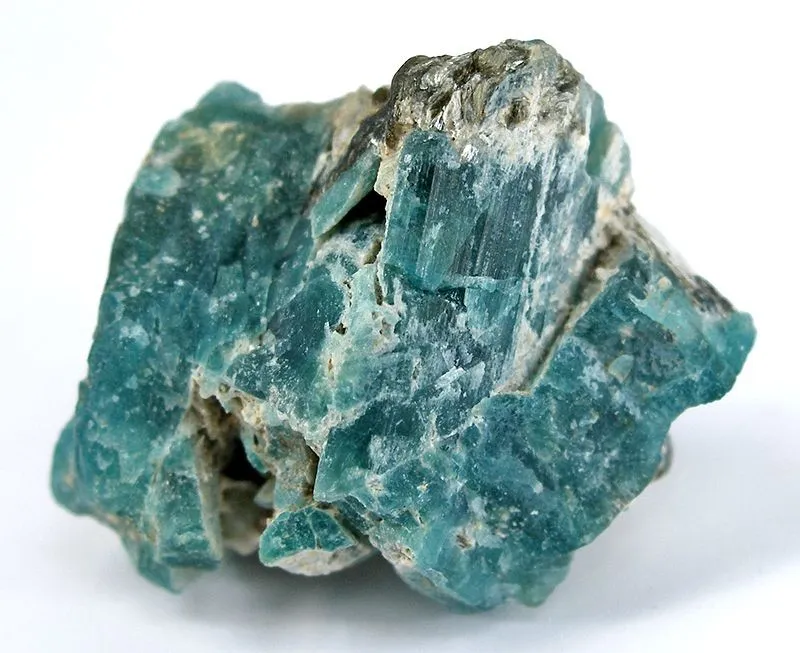
When people think of blue gemstones, sapphire, aquamarine, and tanzanite usually come to mind. However, hidden among the world’s rarest natural treasures is Grandidierite, a gemstone so uncommon that many jewellery enthusiasts and even some collectors have never seen one in person.
Known for its mesmerising blue-green hues, exceptional rarity, and remarkable transparency in the finest specimens, the Grandidierite Gemstone is considered one of the rarest gemstones on Earth. Because gem-quality crystals are extremely scarce, Grandidierite has become highly prized by collectors, gemmologists, and luxury jewellery designers.
Its beauty, combined with its limited availability, makes it one of the most fascinating coloured gemstones in the world.
What is Grandidierite?
Grandidierite is a rare borosilicate mineral containing magnesium, aluminium, and iron. It was first identified in 1902 and named after French explorer and naturalist Alfred Grandidier, who devoted much of his life to studying the natural history of Madagascar.
Most Grandidierite crystals are opaque or translucent. Transparent, gem-quality stones are exceptionally rare, making them especially valuable.
With a hardness of 7 to 7.5 on the Mohs Hardness Scale, Grandidierite is durable enough for jewellery, although its rarity means it is more often found in collectors’ pieces than in everyday jewellery.
Why is Grandidierite So Rare?
The rarity of Grandidierite is due to the highly specific geological conditions required for its formation. It forms only under unusual combinations of temperature, pressure, and mineral-rich environments, making gem-quality crystals exceptionally uncommon.
Unlike gemstones such as sapphire or amethyst, which are mined in several countries, Grandidierite occurs in very limited deposits. Transparent stones suitable for faceting are especially rare, and many collectors may never have the opportunity to own one.
This scarcity has made Grandidierite one of the most sought-after gemstones among collectors of rare minerals.
Where is Grandidierite Found?
The most famous source of Grandidierite is Madagascar, where the mineral was first discovered and where the finest gem-quality specimens continue to be found.
Smaller deposits have also been reported in:
- Sri Lanka
- Namibia
- Malawi
- New Zealand
- India (limited occurrences)
However, transparent material suitable for jewellery is still exceptionally rare, and Madagascar remains the most important source.
The Beautiful Colours of Grandidierite
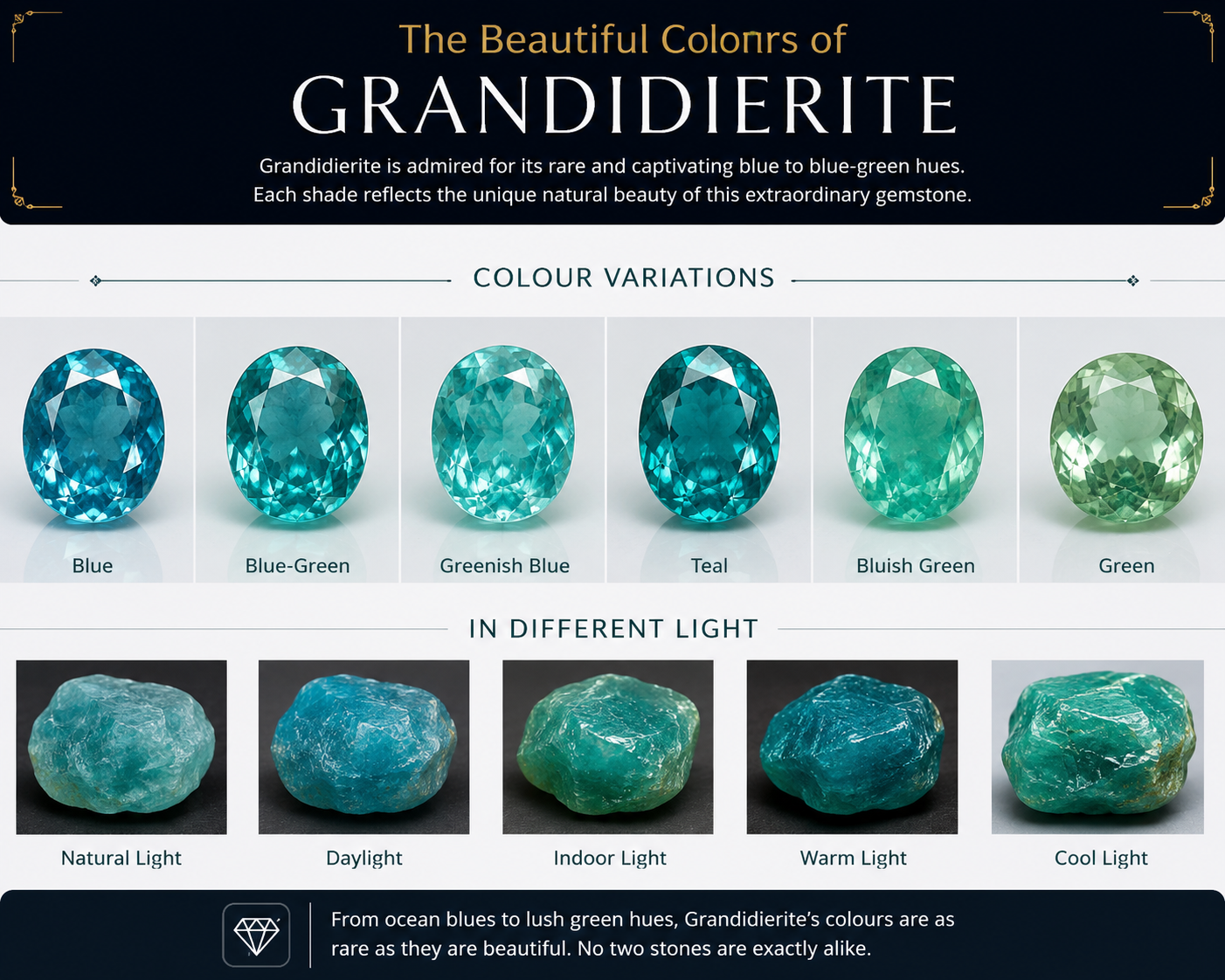
One of the gemstone’s most striking features is its unique colour.
Grandidierite typically appears in shades of:
- Blue
- Blue-green
- Greenish blue
- Teal
- Bluish green
Its colour is influenced by the presence of iron within its crystal structure. Some stones also display pleochroism, meaning they can show different colours when viewed from different angles.
This optical characteristic adds to the gemstone’s uniqueness and appeal.
Grandidierite in Jewellery
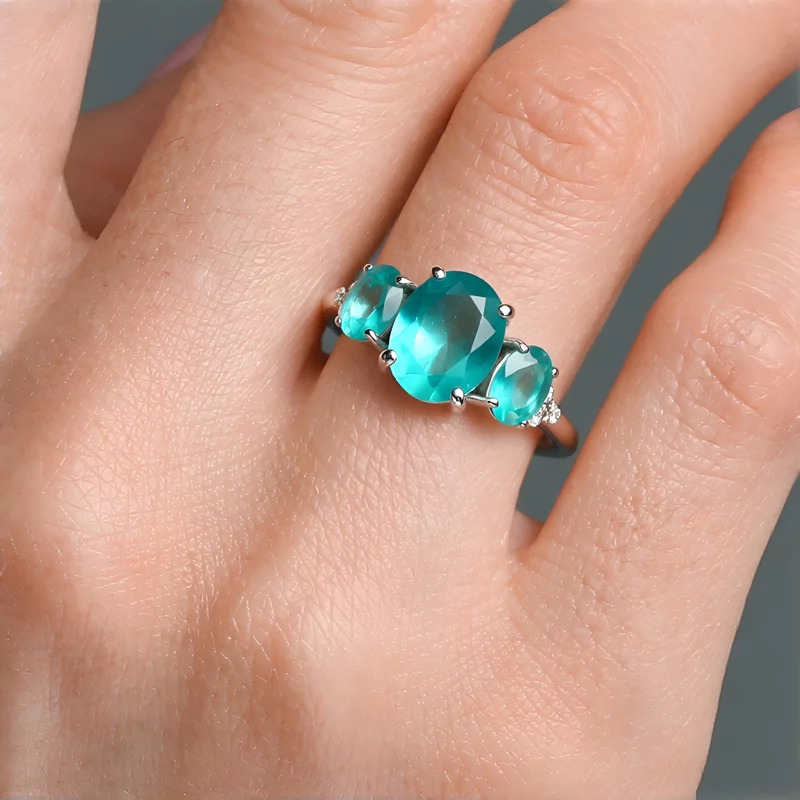
Because of its rarity, Grandidierite is usually reserved for high-end, custom-made jewellery rather than mass-market collections.
It is most commonly used in:
- Statement rings
- Elegant pendants
- Luxury earrings
- Collector’s necklaces
- Bespoke jewellery
Designers often pair Grandidierite with white gold or platinum to enhance its cool blue-green tones and allow the gemstone to remain the focal point.
What Determines the Value of Grandidierite?
Several factors influence the value of a Grandidierite gemstone:
Colour
Vivid blue-green or teal shades are generally the most desirable.
Clarity
Transparent stones are exceptionally rare and command premium prices.
Cut
A well-executed cut maximises brilliance and highlights the gemstone’s colour and pleochroism.
Carat Weight
Larger transparent Grandidierite gemstones are extremely scarce and highly valued.
Origin
Madagascar remains the most recognised source of fine-quality Grandidierite.
Caring for Grandidierite Jewellery
Although reasonably durable, Grandidierite should be handled with care.
- Clean with lukewarm water, mild soap, and a soft brush.
- Avoid harsh chemicals and abrasive cleaners.
- Store separately from harder gemstones such as diamonds.
- Remove jewellery before strenuous activities to minimise the risk of damage.
Proper care helps preserve the gemstone’s natural beauty for years to come.
Why Study Rare Gemstones?
Rare gemstones like Grandidierite provide valuable learning opportunities for students of gemmology. Understanding how these gemstones form, how they are identified, and what influences their value is an essential part of professional gemstone education.
At the Institute of Gems and Jewellery (IGJ), students gain practical knowledge in gemstone identification, diamond grading, jewellery design, jewellery manufacturing, and quality assessment. Studying rare gemstones helps develop the expertise needed to work confidently in the global gems and jewellery industry.
Conclusion
The Grandidierite Gemstone is a remarkable example of nature’s ability to create extraordinary beauty under rare geological conditions. Its captivating blue-green colour, exceptional scarcity, and fascinating optical properties make it one of the world’s most desirable collector gemstones.
Although it is less well-known than sapphire or emerald, Grandidierite continues to grow in popularity among gemmologists, collectors, and luxury jewellery designers. As interest in rare coloured gemstones increases, this extraordinary gem is likely to remain one of the most treasured discoveries in the world of fine jewellery.
Frequently Asked Questions
1. What is Grandidierite?
Grandidierite is a rare blue-green borosilicate gemstone first discovered in Madagascar and prized for its colour and scarcity.
2. Where is Grandidierite found?
The finest gem-quality Grandidierite is found in Madagascar, with smaller deposits reported in countries such as Sri Lanka, Namibia, Malawi, New Zealand, and India.
3. Why is Grandidierite so rare?
It forms only under highly specific geological conditions, and transparent gem-quality crystals are exceptionally uncommon.
4. Is Grandidierite suitable for jewellery?
Yes. With a hardness of 7–7.5 on the Mohs scale, it can be used in jewellery, though it is most often featured in custom or collector’s pieces.
5. Why is Grandidierite valuable?
Its limited supply, attractive blue-green colour, rarity of transparent specimens, and collector demand all contribute to its high value.