
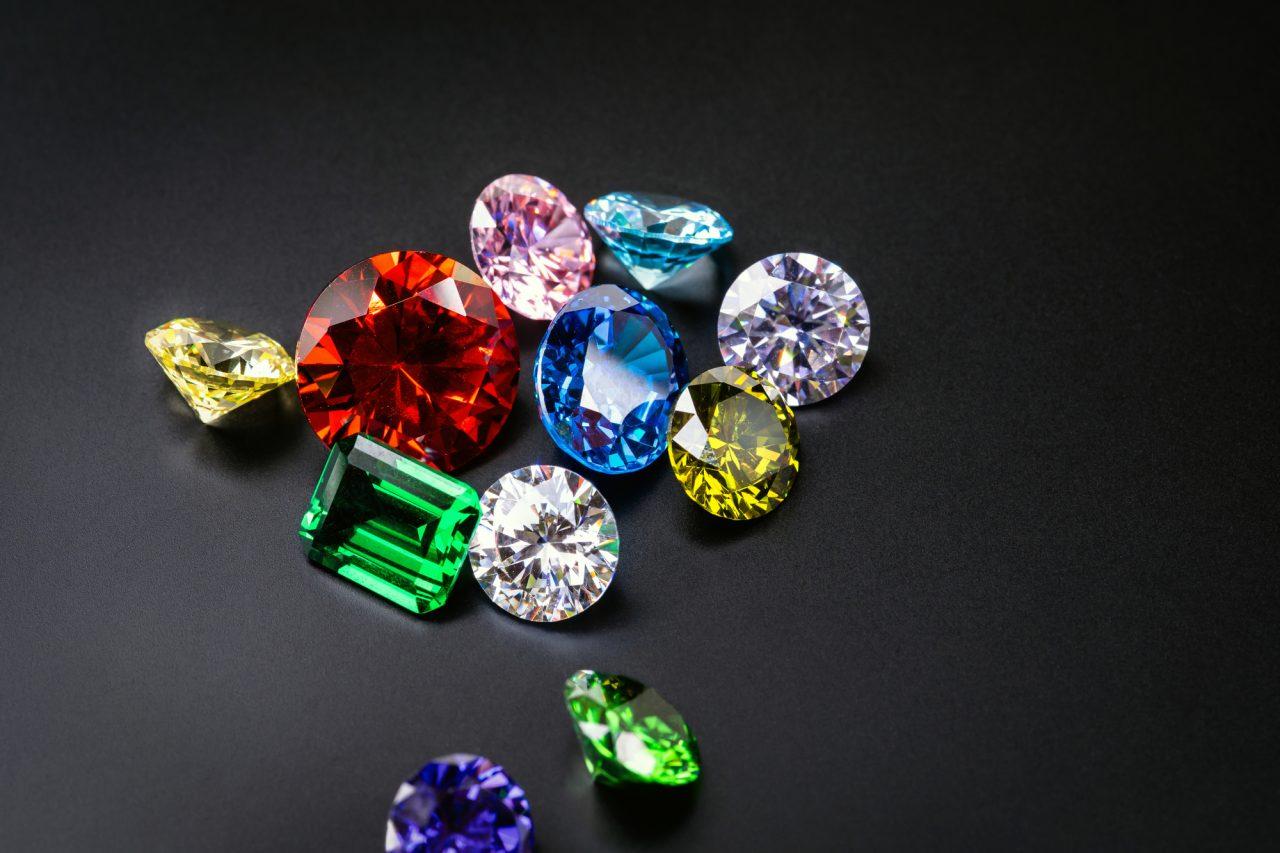
Gemstones are admired for their breathtaking colors, from the deep blue of sapphires to the vibrant green of emeralds and the fiery red of rubies. These colors not only make gemstones visually appealing but also play a significant role in determining their value and rarity.
Have you ever wondered how gemstones get their color? Is it simply nature’s magic, or is there science behind these beautiful shades?
The answer lies in geology, chemistry, and physics. A gemstone’s color is influenced by its chemical composition, crystal structure, trace elements, and even the way it interacts with light.
In this blog, we’ll explore how gemstones get their color, why some gems display extraordinary optical effects, and why understanding gemstone color is an essential skill for every gemmologist.
Why Is Gemstone Color So Important?
Color is often the first characteristic people notice when looking at a gemstone. It greatly influences a gemstone’s beauty, desirability, and market value.
For example:
- Deep red rubies are among the world’s most valuable gemstones.
- Vivid green emeralds are prized for their rich color.
- Royal blue sapphires are highly sought after in luxury jewellery.
- Fancy-colored diamonds can sell for millions of dollars.
A gemstone with exceptional color is generally considered more valuable than one with a dull or uneven appearance.
The Science Behind Gemstone Color
To understand how gemstones get their color, it’s important to know how light behaves.
White light contains all the colors of the rainbow. When light enters a gemstone, some wavelengths are absorbed while others are reflected back to our eyes.
The reflected wavelengths determine the color we see.
For instance:
- If a gemstone absorbs blue and green light but reflects red light, it appears red.
- If it reflects green light, it appears green.
- If it reflects blue light, it appears blue.
This interaction between light and minerals creates the stunning colors found in gemstones.
1. Trace Elements: Nature’s Coloring Agents
One of the most important reasons gemstones have different colors is the presence of trace elements.
Trace elements are tiny amounts of minerals that become part of a gemstone as it forms beneath the Earth’s surface.
Although these elements are present in very small quantities, they can dramatically change a gemstone’s appearance.
Chromium
Chromium gives:
- Ruby → Rich red color
- Emerald → Deep green color
Interestingly, both ruby and sapphire belong to the same mineral family (corundum), but chromium creates the ruby’s distinctive red color.
Iron
Iron contributes to:
- Blue Sapphire
- Yellow Sapphire
- Peridot
Different amounts of iron can produce completely different shades.
Titanium
Titanium works together with iron to produce the famous royal blue color in sapphires.
Copper
Copper is responsible for the brilliant neon-blue color of the famous Paraíba Tourmaline.
This rare gemstone is one of the most valuable tourmalines in the world.
Manganese
Manganese creates the soft pink color seen in Morganite and contributes to the colors of several other gemstones.
2. Crystal Structure and Color
Another fascinating reason how gemstones get their color differs is their crystal structure.
Even gemstones with similar chemical compositions can display different colors because their atoms are arranged differently.
The arrangement of atoms affects how light travels through the gemstone.
This explains why two gemstones containing similar minerals may look completely different.
3. Color Centers
Some gemstones owe their beauty to what scientists call color centers.
These occur when natural radiation changes the arrangement of electrons inside the crystal.
Examples include:
- Blue Topaz
- Smoky Quartz
- Certain colored diamonds
These changes alter the way light interacts with the gemstone, producing unique colors.
4. Optical Phenomena
Some gemstones display extraordinary visual effects beyond simple color.
Alexandrite – Color Change
Alexandrite appears:
- Green in daylight
- Red under incandescent light
This remarkable color-changing ability makes Alexandrite one of the world’s most fascinating gemstones.
Opal – Play-of-Color
Unlike most gemstones, opals display flashes of multiple colors.
This effect occurs because tiny silica spheres inside the gemstone scatter light in different directions.
Star Sapphire – Asterism
Some sapphires display a six-rayed star on their surface when exposed to light.
This rare optical effect is known as asterism.
Cat’s Eye Chrysoberyl
Cat’s Eye gemstones exhibit a narrow band of reflected light resembling a cat’s eye.
This effect is called chatoyancy.
Can Gemstones Change Color?
Yes. Some gemstones are treated to enhance or alter their appearance.
Common treatments include:
Heat Treatment
Used to improve color and clarity.
Irradiation
Changes the color of certain gemstones, such as blue topaz.
Dyeing
Applied to some porous gemstones to enhance their color.
Surface Coating
A thin layer is added to improve appearance or create unique color effects.
Professional gemmologists use specialized instruments to identify these treatments.
Why Gemmologists Study Gemstone Color
Understanding gemstone color is a fundamental part of gemmology.
Professional gemmologists study color to:
- Identify gemstones accurately.
- Detect natural and treated stones.
- Determine gemstone quality.
- Assess value.
- Issue gemstone certifications.
Knowledge of gemstone color helps ensure authenticity and builds trust in the jewellery industry.
Learn Gemmology at the Institute of Gems and Jewellery
If you’ve ever been fascinated by how gemstones get their color, a career in gemmology could be the perfect choice.
At the Institute of Gems and Jewellery, our Gemmology Course provides students with in-depth knowledge of gemstones, diamonds, and modern testing techniques.
Students gain practical experience in:
- Gemstone identification
- Diamond grading
- Colored gemstone analysis
- Gem testing instruments
- Gemstone certification
- Industry-standard evaluation methods
With expert faculty, hands-on laboratory sessions, and industry-focused training, students develop the skills needed for successful careers in the gems and jewellery industry.
Whether your dream is to become a gemologist, diamond grader, jewellery consultant, or gemstone expert, professional education can help you achieve your goals.
Career Opportunities in Gemmology
Completing a gemmology course can open doors to exciting careers, including:
- Gemologist
- Diamond Grader
- Jewellery Consultant
- Gemstone Appraiser
- Quality Control Executive
- Gemstone Buyer
- Jewellery Retail Specialist
- Laboratory Professional
As the global demand for certified gemstones continues to grow, skilled gemmologists remain highly valued in the industry.
Conclusion
Understanding how gemstones get their color reveals the incredible science hidden within nature’s most beautiful treasures. From trace elements and crystal structures to unique optical phenomena, every gemstone has a story millions of years in the making.
For anyone passionate about gemstones, learning gemmology is the key to unlocking this fascinating world. At the Institute of Gems and Jewellery, students gain the knowledge, practical skills, and industry exposure needed to build rewarding careers in the ever-evolving gems and jewellery sector.
Frequently Asked Questions
1. Why do gemstones have different colors?
Gemstones get their colors from trace elements, crystal structures, color centers, and the way they absorb and reflect light.
2. Which trace element makes rubies red?
Chromium is the trace element responsible for the rich red color of rubies.
3. Can gemstone colors be changed?
Yes. Some gemstones undergo treatments such as heat treatment, irradiation, dyeing, or coating to enhance or alter their color.
4. Why is gemstone color important?
Color affects a gemstone’s beauty, rarity, value, and desirability, making it one of the most important factors in gemstone evaluation.
5. Can I learn gemstone identification professionally?
Yes. The Institute of Gems and Jewellery offers a Gemmology Course that provides practical training in gemstone identification, grading, certification, and industry-standard testing techniques.