
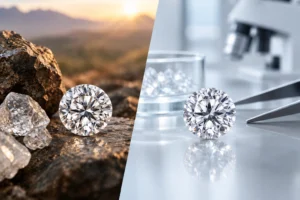
Diamonds have traditionally been associated with luxury, celebrations and timeless jewellery. Today, however, buyers have another option: lab-grown diamonds.
A lab-grown diamond can look very similar to a natural diamond, but the two have different origins and different market characteristics. This has made one question increasingly common among jewellery buyers:
Should you choose a lab-grown diamond or a natural diamond in 2026?
The answer depends on your budget, preferences, the purpose of the purchase and what you expect from your diamond in the future.
What Is a Natural Diamond?
A natural diamond is formed naturally deep inside the Earth under extremely high pressure and temperature. Its formation takes place over a very long geological period.
Natural diamonds are valued for their natural origin, rarity and individual characteristics.
The value of a natural diamond depends on several factors, including its:
- Cut
- Colour
- Clarity
- Carat weight
- Shape
- Certification
These characteristics are commonly known as the 4Cs, along with other factors that can influence the final price.
What Is a Lab-Grown Diamond?
A lab-grown diamond is created using advanced technology in a controlled environment.
Two commonly used production methods are:
- HPHT – High Pressure High Temperature
- CVD – Chemical Vapor Deposition
Lab-grown diamonds are diamonds, not imitation stones. Their main difference from natural diamonds is their origin.
A lab-grown diamond should also not be confused with diamond simulants such as cubic zirconia or other diamond-look materials.
Natural Diamond vs Lab-Grown Diamond
The easiest way to understand the difference is to look at their key characteristics.
| Feature | Natural Diamond | Lab-Grown Diamond |
|---|---|---|
| Origin | Formed naturally inside the Earth | Created in a controlled environment |
| Formation | Geological process | Technological process |
| Appearance | Diamond | Diamond |
| Chemical structure | Diamond | Essentially the same diamond structure |
| Availability | Naturally limited | Can be produced |
| Price | Generally higher | Generally lower |
| Certification | Important | Important |
| Buyer preference | Natural origin and rarity | Value and modern production |
Are Lab-Grown Diamonds Real Diamonds?
Yes.
A lab-grown diamond is a real diamond. The important distinction is not whether it is a diamond, but how it was formed.
Natural diamonds develop naturally within the Earth, while lab-grown diamonds are produced using technology that recreates conditions suitable for diamond formation.
This is why buyers should not compare lab-grown diamonds with imitation stones as though they are the same thing.
Why Are Lab-Grown Diamonds Usually Less Expensive?
One of the biggest reasons buyers consider lab-grown diamonds is their price.
Natural diamonds are limited by their geological origin and the processes involved in discovering and recovering them. Lab-grown diamonds can be produced in controlled facilities.
Because of this difference in supply, lab-grown diamonds are generally available at a lower price than comparable natural diamonds.
This can allow a buyer to consider:
- A larger diamond
- A higher carat weight
- Different shapes
- Higher specifications
within the same budget.
However, prices vary between individual diamonds and retailers, so comparing the complete jewellery price is important.
Does a Lab-Grown Diamond Look Different?
A good-quality lab-grown diamond can have the same visual characteristics people associate with diamonds, including brilliance and fire.
For an ordinary buyer, determining whether a diamond is natural or lab-grown simply by looking at it can be difficult.
Professional equipment and appropriate grading or identification reports may be required to establish its origin.
That is why buyers should always ask for clear information about the diamond they are purchasing.
Natural Diamond vs Lab-Grown Diamond: What About Resale?
Resale is an important consideration, but diamonds should not automatically be treated as guaranteed investment products.
The resale price of a diamond can depend on:
- Original quality
- Current market conditions
- Certification
- Brand
- Buyer demand
- Jeweller’s exchange or buyback policy
Lab-grown diamonds have also experienced significant changes in pricing as production has expanded.
So, if future resale matters to you, don’t rely only on the original purchase price. Ask the jeweller specifically how their buyback or exchange value is calculated.
Which Is Better for an Engagement Ring?
Both options can work well for an engagement ring.
A natural diamond may suit you if you value:
- Natural origin
- Rarity
- Traditional diamond ownership
- The story behind a naturally formed stone
A lab-grown diamond may suit you if you value:
- Lower initial cost
- A larger stone within your budget
- Modern technology
- Contemporary buying options
There is no single choice that is right for every couple.
5 Things to Check Before Buying a Diamond
1. Understand the 4Cs
Learn about:
Cut, Colour, Clarity and Carat.
Don’t choose a diamond based only on its size.
2. Confirm the Diamond’s Origin
Ask whether the diamond is:
- Natural
- Lab-grown
- Or a diamond simulant
These are different categories.
3. Check the Certificate
For a significant purchase, ask for appropriate certification or grading documentation and make sure the information matches the stone being sold.
4. Compare the Complete Jewellery Price
Don’t look only at the diamond price.
Also consider:
- Gold or platinum cost
- Making charges
- Taxes
- Certification charges
- Other applicable costs
5. Ask About Exchange and Buyback
If you may sell or exchange the jewellery later, understand the policy before purchasing.
Which Diamond Is Better in 2026?
There is no universal answer.
A natural diamond may be more suitable for someone who places greater importance on natural origin, rarity and traditional diamond ownership.
A lab-grown diamond may be more suitable for someone who wants to spend less or get a larger diamond within a particular budget.
So instead of asking:
“Which diamond is better?”
a more useful question is:
“Which diamond is better for my needs and budget?”
Natural Diamond or Lab-Grown Diamond: Quick Guide
Choose natural if your priority is:
Natural origin + rarity + traditional appeal.
Choose lab-grown if your priority is:
Value for money + size + modern production.
For either option:
Check the 4Cs, certification, total cost and seller’s policies before purchasing.
FAQs
Are lab-grown diamonds real?
Yes. Lab-grown diamonds are diamonds produced in a controlled environment. Their origin differs from naturally formed diamonds.
Are lab-grown diamonds cheaper?
Generally, yes. Comparable lab-grown diamonds are usually available at lower prices than natural diamonds, although the actual price depends on quality and market conditions.
Can you tell a lab-grown diamond from a natural diamond by looking at it?
It can be difficult to distinguish them by appearance alone. Professional testing may be required to identify the origin.
Which has better resale value?
Neither should be assumed to have a guaranteed resale return. Resale depends on the diamond, market conditions and the jeweller’s buyback or exchange policy.
Are lab-grown diamonds good for engagement rings?
Yes. They can be a suitable option for buyers who want a diamond while working within a particular budget.
Final Thoughts
The choice between a lab-grown diamond and a natural diamond ultimately comes down to personal priorities.
Natural diamonds offer a naturally formed origin and a long history in jewellery. Lab-grown diamonds offer another way to own a diamond, often at a lower initial price.
Before making a decision, compare the quality, certification, total cost, origin and future exchange or resale terms.
And for anyone interested in understanding diamonds beyond buying them, learning about gemology, diamond grading and jewellery design can open the door to exciting opportunities in the jewellery industry.
Interested in building knowledge and skills in the jewellery industry? Explore Gemology and Jewellery courses at IGJ.