
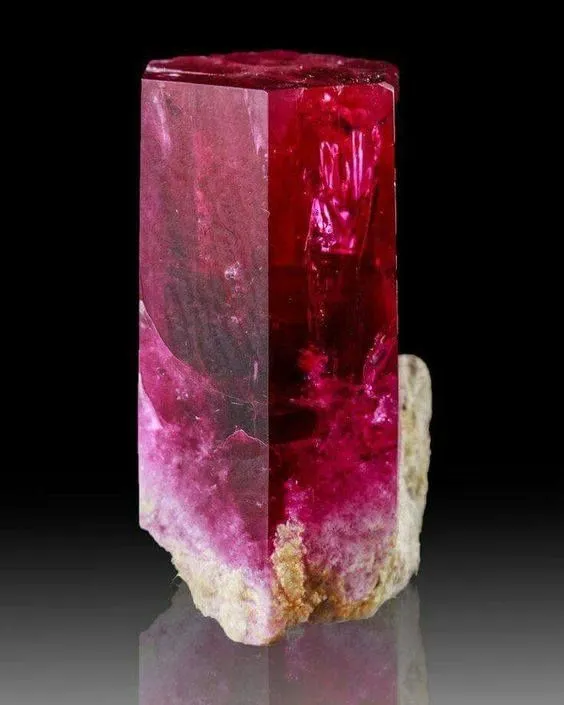
Imagine finding a gemstone with a vivid red colour, exceptional rarity, and crystals so small that large faceted examples are almost unheard of. This is Red Beryl, one of the most fascinating and elusive gemstones in the world.
Sometimes called bixbite, Red Beryl belongs to the same mineral family as emerald and aquamarine. However, unlike its famous relatives, gem-quality Red Beryl is extraordinarily rare.
So, what makes this tiny red gemstone so difficult to find?
What Is Red Beryl?
Red Beryl is a rare red variety of beryl, the same mineral family that includes:
- Emerald
- Aquamarine
- Morganite
- Goshenite
- Heliodor
Its striking red colour is primarily associated with manganese in its crystal structure.
The colour can range from bright raspberry-red to deep reddish-purple tones, with the most attractive stones displaying a strong, saturated red.
Why Is Red Beryl So Rare?
The rarity of Red Beryl comes down to its unusual geological requirements.
For Red Beryl to form, specific combinations of elements, temperature, pressure, and geological conditions must occur at the same time. These conditions are uncommon in nature.
Even when Red Beryl crystals form, most are too small or heavily included to produce attractive faceted gemstones.
This combination of limited deposits + tiny crystals + low gem-quality yield makes Red Beryl exceptionally rare.
Where Is Red Beryl Found?
The most famous source of Red Beryl is Utah, USA.
The gemstone is particularly associated with deposits in the Wah Wah Mountains of Beaver County, Utah.
Small occurrences have also been reported elsewhere, but Utah remains the locality most strongly associated with gem-quality Red Beryl.

What Gives Red Beryl Its Red Colour?
Colour is one of Red Beryl’s most remarkable characteristics.
The vibrant red colour is mainly caused by manganese, which interacts with the mineral’s crystal structure to produce its distinctive appearance.
Unlike many red gemstones, Red Beryl has its own unique combination of colour and mineral composition.
Red Beryl vs Ruby: What’s the Difference?
Because both can display an intense red colour, Red Beryl and ruby can sometimes be compared.
| Feature | Red Beryl | Ruby |
|---|---|---|
| Mineral | Beryl | Corundum |
| Main Colouring Element | Manganese | Chromium |
| Hardness | 7.5–8 | 9 |
| Rarity | Extremely rare | Rare |
| Major Source | Utah, USA | Several countries |
| Common Use | Collector gemstones | Fine jewellery |
Ruby is harder and more commonly used in everyday jewellery, while Red Beryl is particularly prized by collectors because of its exceptional rarity.
Why Are Red Beryl Crystals Usually Small?
One of the most interesting features of Red Beryl is its typical crystal size.
Large, clean crystals are extremely uncommon. Most crystals found in nature are relatively small and may contain inclusions or fractures.
As a result, large faceted Red Beryl gemstones are exceptionally rare.
This is one reason collectors place such high value on attractive, well-cut specimens.
How Valuable Is Red Beryl?
The value of Red Beryl depends on several factors, including:
Colour
Strong, saturated red colour is highly desirable.
Clarity
Transparent stones with fewer visible inclusions are especially rare.
Size
Large faceted stones are exceptionally difficult to find.
Cut
A skilled cut can maximise the stone’s colour and brilliance.
Origin
Material from historically significant localities can be particularly interesting to collectors.
Because fine Red Beryl is so scarce, exceptional specimens can command very high prices relative to their size.
Is Red Beryl Used in Jewellery?
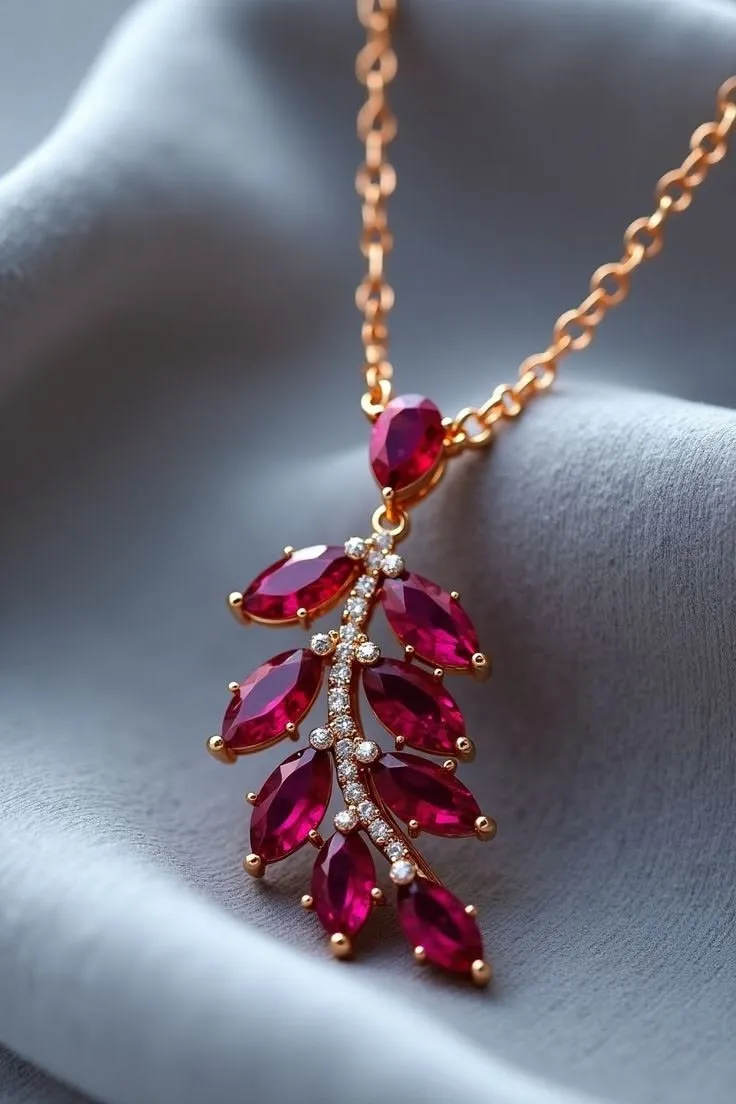
Yes, but its use is limited because of its rarity and typically small crystal size.
When suitable material is available, Red Beryl may be fashioned into:
- Rings
- Pendants
- Earrings
- Collector’s jewellery
- Custom gemstone pieces
However, it is far more commonly encountered in gemstone collections and mineral specimens than in everyday commercial jewellery.
Red Beryl and Emerald: Same Family, Very Different Gemstones
Red Beryl and emerald are both varieties of beryl, but their colours come from different colouring elements.
Emerald gets its characteristic green colour primarily from chromium and/or vanadium.
Red Beryl gets its red colour primarily from manganese.
This makes them a fascinating example of how trace elements can dramatically change the appearance of a mineral.
Interesting Facts About Red Beryl
- Red Beryl belongs to the beryl mineral family.
- It is strongly associated with Utah, USA.
- It is sometimes known by the name bixbite, although that name is discouraged in modern gemological usage because it can cause confusion.
- Most Red Beryl crystals are very small.
- Large, transparent faceted examples are extraordinarily rare.
- Its intense red colour is mainly associated with manganese.
- It is considered one of the great collector gemstones.
Why Gemologists Find Red Beryl Fascinating
Red Beryl demonstrates how geological conditions and trace elements can create extraordinary gemstone varieties.
For gemology students, studying rare gemstones like Red Beryl provides insight into:
- Mineral identification
- Colour origins
- Crystal formation
- Gemstone rarity
- Cutting and faceting
- Gemstone valuation
Understanding unusual gemstones helps aspiring gemologists develop a deeper appreciation of how minerals become valuable gems.
How to Care for Red Beryl
Although Red Beryl has a hardness of around 7.5–8 on the Mohs scale, its rarity means it should be handled carefully.
To protect a Red Beryl gemstone:
- Avoid strong impacts.
- Keep it away from abrasive materials.
- Store it separately from other jewellery.
- Clean it gently with mild soapy water and a soft cloth.
- Avoid harsh chemicals and unnecessary heat exposure.
Conclusion
Red Beryl is proof that a gemstone doesn’t have to be large to be extraordinary.
Its intense red colour, unusual geological formation, limited sources, and scarcity of gem-quality crystals make it one of the most fascinating gemstones for collectors and gemology enthusiasts.
While ruby may be the better-known red gemstone, Red Beryl occupies a much rarer corner of the gem world. Its tiny crystals represent an extraordinary combination of geological chance and natural beauty.
Frequently Asked Questions
Why is Red Beryl so rare?
Red Beryl requires highly unusual geological conditions to form, and most crystals are too small or included to produce high-quality faceted gems.
Where is Red Beryl found?
The most famous source is Utah, USA, particularly the Wah Wah Mountains.
Is Red Beryl rarer than ruby?
Gem-quality Red Beryl is exceptionally rare and is generally considered far less commonly encountered than ruby.
Is Red Beryl the same as emerald?
No. Both are varieties of beryl, but Red Beryl is coloured red primarily by manganese, while emerald is green due mainly to chromium and/or vanadium.
Is Red Beryl expensive?
Fine-quality Red Beryl can be extremely valuable because attractive, transparent crystals are so rare.