
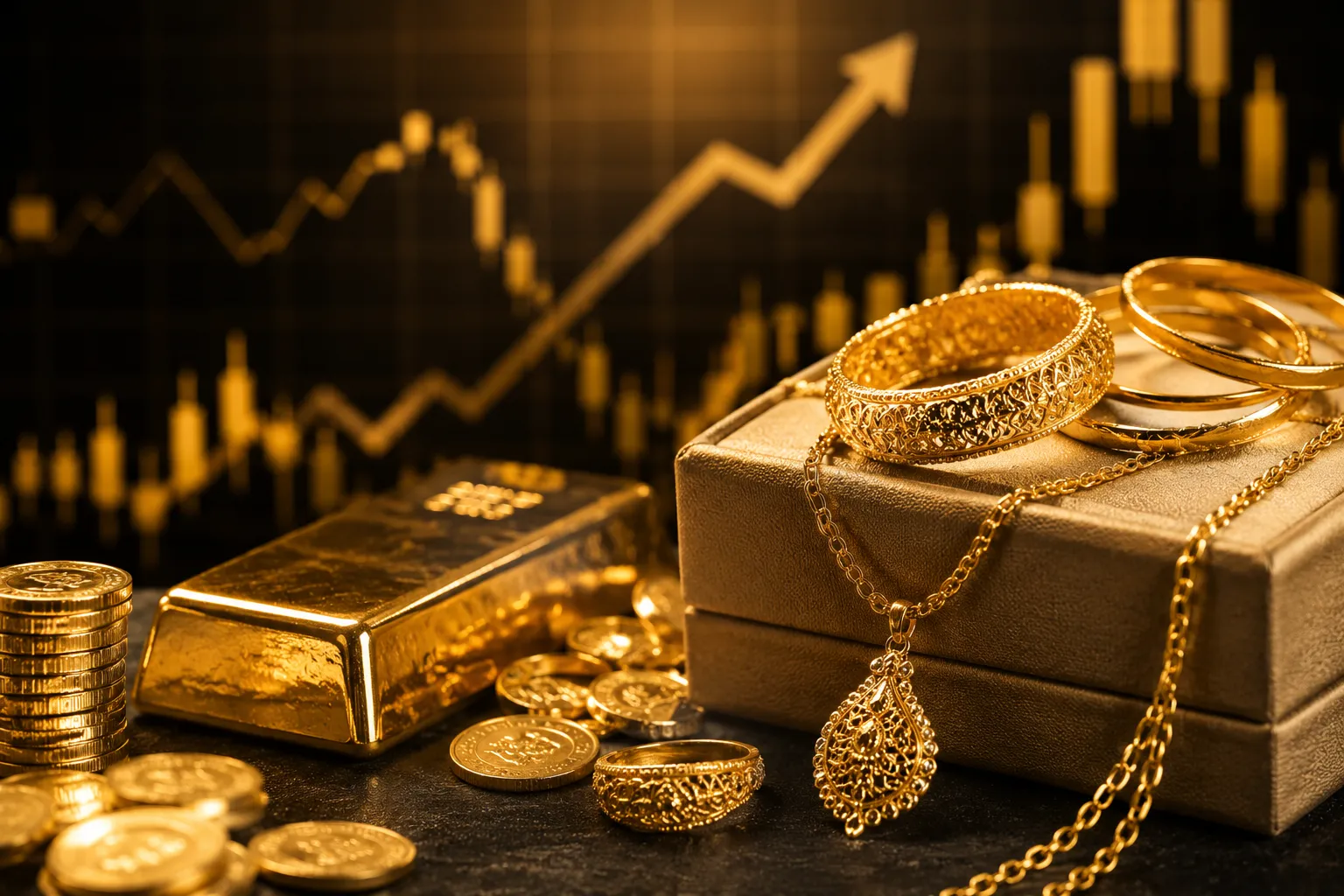
Gold has always been one of the world’s most valuable assets. Whether you’re buying jewelry, investing in gold, or simply checking the daily gold rate, you’ve likely noticed that gold prices rarely stay the same. But why gold prices change every day?
The answer lies in a combination of global economic conditions, supply and demand, currency movements, and investor behaviour. Understanding these factors can help you make smarter decisions when buying gold jewelry or investing in precious metals.
In this guide, we’ll explain the 10 major reasons why gold prices change every day.
1. Supply and Demand
The biggest factor affecting gold prices is supply and demand.
When more people want to buy gold than sell it, prices increase. Conversely, when demand decreases or supply rises, prices tend to fall.
Gold demand comes from several sectors:
- Jewelry industry
- Investment demand
- Central banks
- Technology and electronics
Countries like India and China are among the largest consumers of gold, making their demand a significant influence on global prices.
2. Inflation
Inflation is one of the primary reasons investors buy gold.
As inflation rises, the purchasing power of money decreases. Since gold has historically maintained its value, many people consider it a safe store of wealth.
Higher inflation often leads to increased demand for gold, which can drive prices upward.
3. Interest Rates
Interest rates and gold prices often have an inverse relationship.
When interest rates rise:
- Savings accounts become more attractive.
- Bonds offer better returns.
- Investors may reduce their gold holdings.
When interest rates fall:
- Gold becomes more appealing.
- Investment demand increases.
- Gold prices often rise.
4. Strength of the US Dollar
Gold is traded globally in US dollars.
A weaker dollar usually makes gold more affordable for international buyers, increasing demand and supporting higher prices.
A stronger dollar can have the opposite effect, making gold more expensive in other currencies and reducing demand.
5. Global Economic Uncertainty
Whenever uncertainty affects the global economy, investors often turn to gold.
Examples include:
- Financial crises
- Stock market volatility
- Wars
- Political instability
- Global pandemics
Gold is widely regarded as a “safe-haven” asset during uncertain times.
6. Central Bank Gold Purchases
Central banks hold large gold reserves.
When central banks increase their gold purchases, demand rises, which can contribute to higher gold prices.
Likewise, significant sales of gold reserves may influence market prices.
7. Gold Mining Production
Gold is a limited natural resource.
Mining companies face challenges such as:
- Rising production costs
- Labour shortages
- Environmental regulations
- Declining ore quality
Reduced production can tighten supply, supporting higher gold prices.
8. Jewelry Demand
Jewelry accounts for a large share of global gold consumption.
Demand typically increases during:
- Wedding seasons
- Festivals
- Holiday shopping periods
In countries like India, festive seasons and weddings often lead to higher gold purchases, influencing market demand.
9. Investor Activity
Institutional investors, mutual funds, and Gold ETFs buy and sell gold every day.
Large investment inflows can increase demand and push prices higher, while heavy selling can result in lower prices.
Investor sentiment changes quickly based on economic news and market expectations.
10. Daily Commodity Market Trading
Gold is traded 24 hours a day across international markets.
Prices react almost instantly to:
- Inflation reports
- Employment data
- Central bank announcements
- Currency movements
- Global news
- Market sentiment
This constant trading is one reason why the gold price can change multiple times in a single day.
Should You Buy Gold When Prices Are Low?
Many people try to predict the perfect time to buy gold. While purchasing during price dips may be beneficial, accurately timing the market is extremely difficult.
Instead, consider:
- Buying from trusted jewelers
- Checking the purity and hallmark certification
- Comparing making charges
- Purchasing based on your long-term financial goals rather than short-term price changes
For jewelry buyers, quality and craftsmanship are just as important as the day’s gold rate.
FAQs
Why does the gold price change every day?
Gold prices change daily because of supply and demand, inflation, interest rates, currency values, global economic events, and investor activity.
Does inflation increase gold prices?
In many cases, yes. Higher inflation often leads investors to buy gold as a store of value, increasing demand.
Why is gold considered a safe investment?
Gold has historically retained its value during periods of economic uncertainty, making it a popular safe-haven asset.
Do wedding seasons affect gold prices?
Wedding seasons and festivals can increase jewelry demand, which may contribute to higher gold prices, especially in countries with strong cultural demand for gold.
Is gold a good long-term investment?
Gold can help diversify an investment portfolio and preserve value over time, but it’s important to consider your financial goals and risk tolerance.
Conclusion
Understanding why gold prices change every day can help you make informed decisions whether you’re purchasing jewelry or investing in precious metals. Daily price movements are influenced by global supply and demand, inflation, interest rates, currency fluctuations, central bank policies, and investor sentiment.
While short-term price changes are normal, gold has remained a trusted store of value for centuries. By staying informed about the factors affecting gold prices, you can buy with greater confidence and make smarter long-term decisions.