
How Diamonds Are Graded
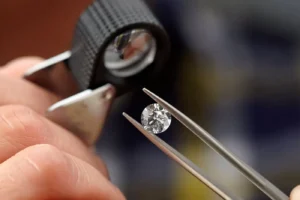
Diamonds are among the most valuable and sought-after gemstones in the world. Whether you are purchasing a diamond, studying gemmology, or exploring a career in the jewellery industry, understanding how diamonds are graded is essential.
Diamond grading is a scientific process used to evaluate a diamond’s quality and value. Professional gemologists assess diamonds based on internationally recognized standards to ensure consistency and accuracy.
In this guide, we’ll explain how diamonds are graded, the factors that influence their value, and why diamond grading plays a crucial role in the jewellery industry.
What Is Diamond Grading?
Diamond grading is the process of evaluating a diamond’s characteristics and assigning quality grades based on established criteria.
The grading process helps determine:
- Quality
- Authenticity
- Rarity
- Market Value
Professional gemologists use specialized tools and industry-standard procedures to assess each diamond.
The 4Cs of Diamond Grading
The foundation of diamond grading is based on the 4Cs:
1. Cut
The cut of a diamond refers to how well it has been shaped and faceted.
A well-cut diamond reflects light effectively, creating brilliance and sparkle.
Diamond cut grades typically include:
- Excellent
- Very Good
- Good
- Fair
- Poor
Many experts consider cut to be the most important factor because it significantly affects a diamond’s appearance.
2. Color
Diamond color measures the absence of color in a white diamond.
Diamonds are graded on a scale from:
- D (Colorless)
- E-F (Nearly Colorless)
- G-J (Near Colorless)
- K-Z (Noticeable Color)
Colorless diamonds are generally rarer and more valuable.
3. Clarity
Clarity refers to the presence of internal inclusions and external blemishes.
Clarity grades include:
- FL (Flawless)
- IF (Internally Flawless)
- VVS1-VVS2 (Very Very Slightly Included)
- VS1-VS2 (Very Slightly Included)
- SI1-SI2 (Slightly Included)
- I1-I3 (Included)
Gemologists carefully examine diamonds under magnification to determine clarity grades.
4. Carat Weight
Carat measures the weight of a diamond.
One carat equals 0.2 grams.
Common diamond sizes include:
- 0.25 Carat
- 0.50 Carat
- 1.00 Carat
- 2.00 Carat and above
Larger diamonds are generally more valuable, especially when combined with excellent cut, color, and clarity.
Additional Factors Considered During Diamond Grading
While the 4Cs are the primary grading criteria, gemologists may also evaluate:
Shape
Popular diamond shapes include:
- Round Brilliant
- Princess
- Oval
- Emerald
- Cushion
- Pear
- Marquise
Fluorescence
Some diamonds emit visible light when exposed to ultraviolet (UV) light.
Fluorescence can affect appearance and value.
Symmetry and Polish
These factors assess the precision of the diamond’s craftsmanship and finishing quality.
Tools Used for Diamond Grading
Professional gemologists use specialized equipment, including:
- Microscope
- Jeweller’s Loupe
- Diamond Master Stones
- Precision Scale
- UV Light Equipment
- Diamond Testing Instruments
These tools help ensure accurate and consistent grading results.
Why Is Diamond Grading Important?
Understanding how diamonds are graded helps consumers and industry professionals make informed decisions.
Benefits of diamond grading include:
- Accurate quality assessment
- Transparent pricing
- Consumer confidence
- Reliable certification
- Better investment decisions
Diamond grading reports provide buyers with objective information about a diamond’s characteristics.
Who Grades Diamonds?
Diamond grading is performed by trained gemologists working in:
- Gemmological laboratories
- Diamond grading centers
- Jewellery companies
- Independent appraisal services
Their expertise ensures that diamonds are evaluated according to recognized industry standards.
Learn Diamond Grading at Institute of Gems and Jewellery
For students interested in diamonds, gemstones, and jewellery careers, understanding how diamonds are graded is a fundamental skill.
At Institute of Gems and Jewellery, our Gemmology Course introduces students to the principles of diamond grading, gemstone identification, and industry-standard evaluation techniques.
Students gain practical exposure to:
- Diamond grading fundamentals
- Gemstone identification
- Gem testing instruments
- Diamond quality assessment
- Industry practices and standards
This hands-on learning experience helps prepare students for careers in gemmology, diamond grading, jewellery retail, and gemstone evaluation.
Career Opportunities in Diamond Grading
Professionals with diamond grading knowledge can pursue careers as:
- Gemologist
- Diamond Grader
- Jewellery Consultant
- Quality Control Executive
- Gemstone Appraiser
- Jewellery Retail Specialist
As the gems and jewellery industry continues to grow, skilled diamond grading professionals remain in demand.
Conclusion
Understanding how diamonds are graded is essential for anyone interested in diamonds, jewellery, or a career in gemmology. The 4Cs—cut, color, clarity, and carat weight—form the foundation of diamond evaluation and help determine a diamond’s quality and value.
For students aspiring to enter the gems and jewellery industry, learning diamond grading through professional training can provide valuable skills and exciting career opportunities.
FAQ
What are the 4Cs of diamond grading?
The 4Cs are Cut, Color, Clarity, and Carat Weight.
Who grades diamonds?
Diamonds are graded by trained gemologists using industry-standard procedures and equipment.
Why is diamond grading important?
Diamond grading helps determine a diamond’s quality, authenticity, and value.
Can I learn diamond grading professionally?
Yes. Professional gemmology programs, such as those offered by the Institute of Gems and Jewellery, provide training in diamond grading and gemstone evaluation.