
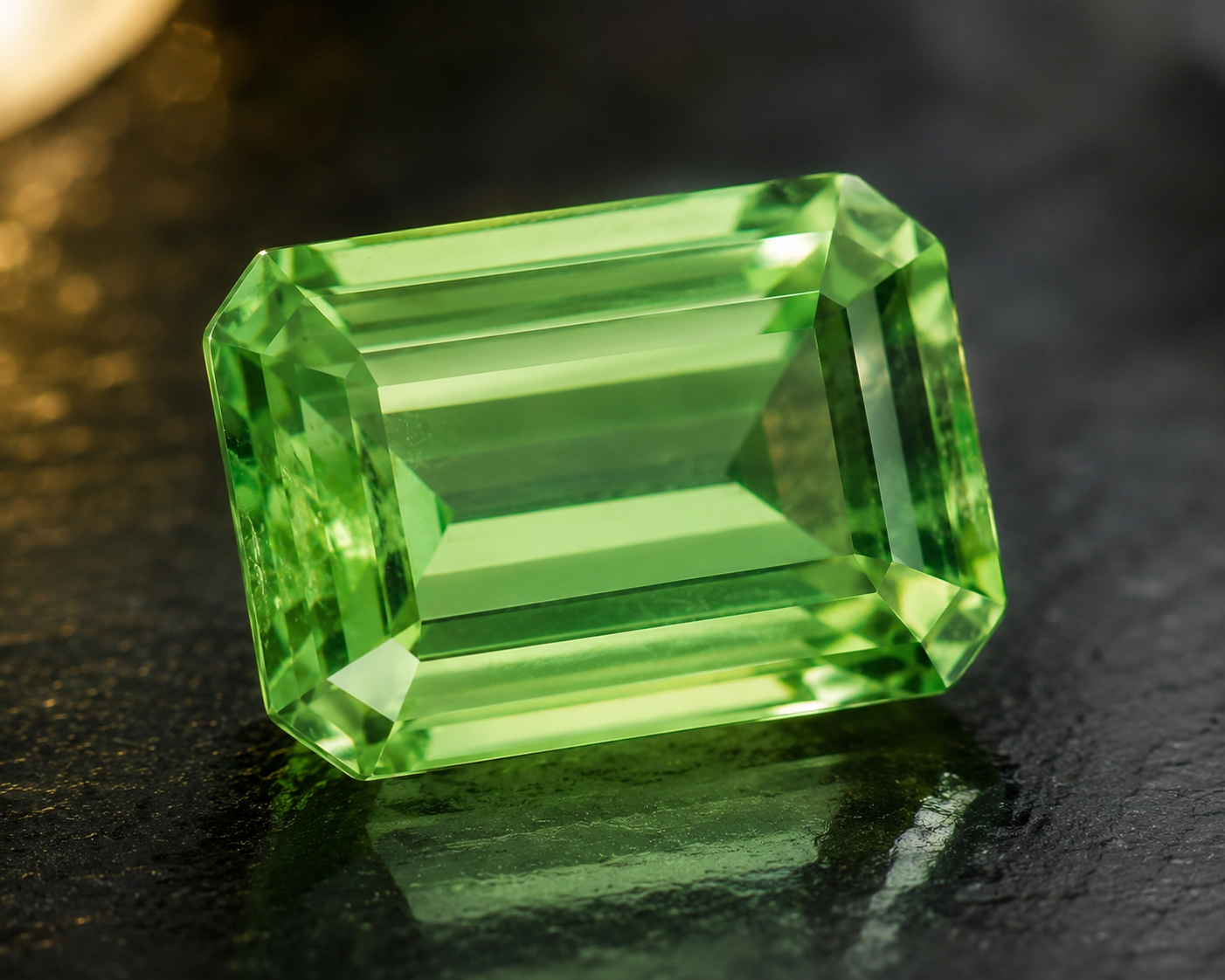
The world of gemstones is filled with dazzling treasures, but few are as intriguing as the Hiddenite gemstone. With its vibrant green colour, exceptional rarity, and fascinating history, Hiddenite has become a prized possession among gemstone collectors, jewellers, and gem enthusiasts.
Although it is less well-known than emerald or jade, Hiddenite stands out for its unique beauty and limited availability. Its brilliant green shades and natural brilliance make it one of the most desirable collector’s gemstones in the world.
In this guide, we’ll explore everything you need to know about Hiddenite, including its history, characteristics, sources, value, uses, and care.
What Is Hiddenite?
Hiddenite is a green variety of the mineral spodumene, a lithium aluminium inosilicate. It belongs to the pyroxene family of minerals and is admired for its transparent appearance and vivid green colour.
The gemstone gets its green colour primarily from traces of chromium, although other trace elements may also influence its hue.
Unlike emerald, which belongs to the beryl family, Hiddenite has a different crystal structure and optical properties, giving it a distinctive sparkle.
The History Behind Hiddenite
Hiddenite was discovered in 1879 in North Carolina, USA, by mineral collector William Earl Hidden. The gemstone was later named in his honour.
Its discovery brought worldwide attention because naturally occurring green spodumene was extremely rare. Today, Hiddenite remains one of the most sought-after collector gemstones due to its scarcity.
Why Is Hiddenite So Rare?
Hiddenite is considered rare because the geological conditions required for its formation are uncommon.
Several factors contribute to its rarity:
- Limited natural deposits
- Gem-quality crystals are uncommon
- High transparency is difficult to find
- Larger stones are extremely rare
Because of these factors, fine-quality Hiddenite often commands premium prices in the gemstone market.
Colour and Appearance
The most attractive feature of Hiddenite is its beautiful green colour.
Its colour may range from:
- Light yellowish-green
- Fresh apple green
- Bright emerald green
- Deep yellow-green
The finest specimens display a rich, vibrant green with excellent transparency.
When properly cut, Hiddenite exhibits impressive brilliance, making it ideal for high-end jewellery.
Physical Properties of Hiddenite
| Property | Details |
|---|---|
| Mineral Family | Spodumene |
| Colour | Light to deep green |
| Hardness | 6.5–7 on the Mohs Scale |
| Lustre | Vitreous |
| Transparency | Transparent to translucent |
| Crystal System | Monoclinic |
| Cleavage | Perfect |
| Chemical Formula | LiAlSi₂O₆ |
Although reasonably hard, Hiddenite has perfect cleavage, meaning it should be handled carefully during cutting and jewellery setting.
Where Is Hiddenite Found?
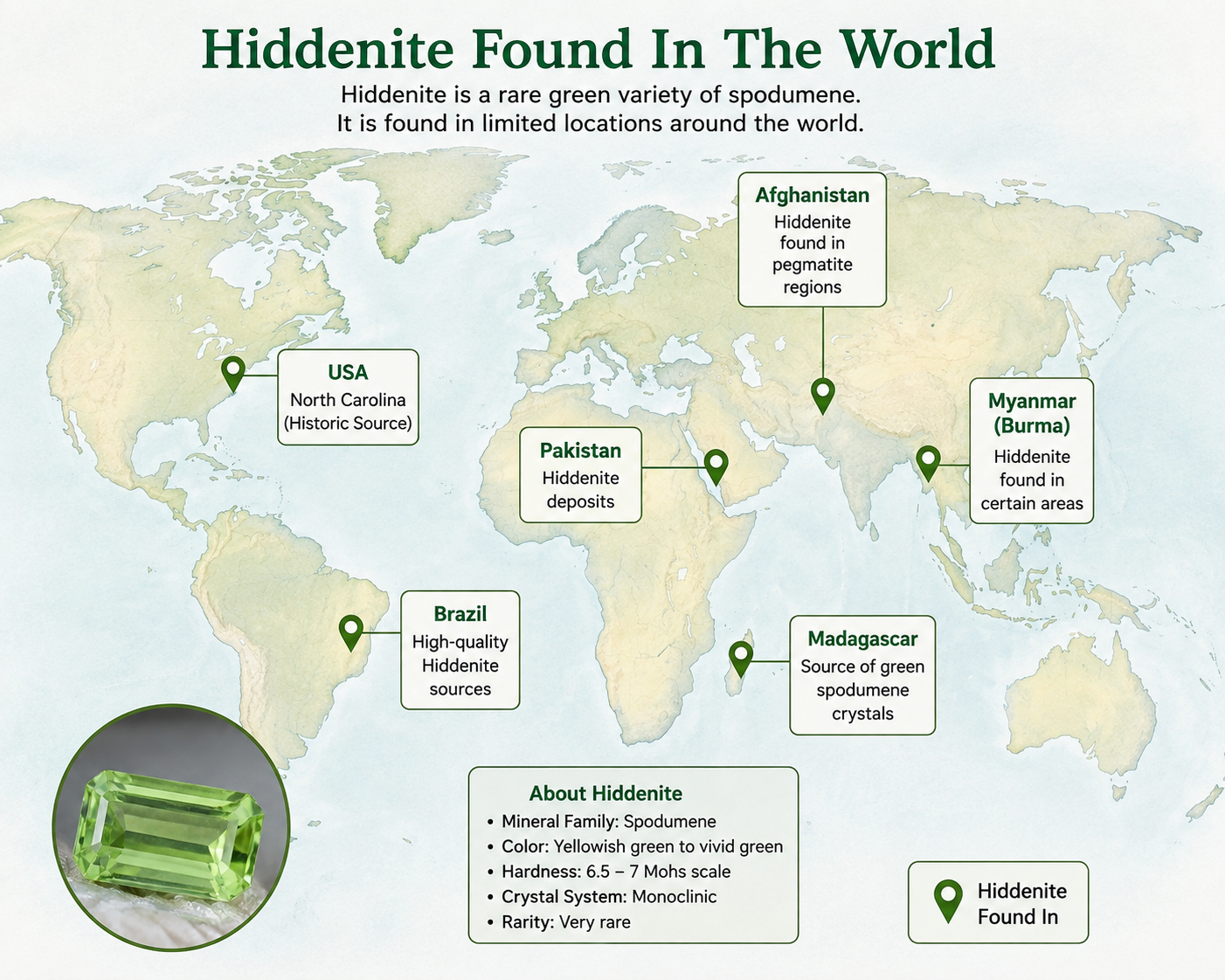
While Hiddenite was first discovered in the United States, gem-quality material is also found in a few other countries.
Major sources include:
- North Carolina, USA (historic source)
- Brazil
- Afghanistan
- Madagascar
- Pakistan
- Myanmar (Burma)
Brazil has become one of the leading sources of high-quality Hiddenite in recent years.
Hiddenite vs Emerald
Although both gemstones are green, they differ in several ways.
| Feature | Hiddenite | Emerald |
|---|---|---|
| Mineral | Spodumene | Beryl |
| Colour | Yellowish to vivid green | Deep green |
| Hardness | 6.5–7 | 7.5–8 |
| Rarity | Very rare | Rare |
| Typical Use | Collectibles & jewellery | Fine jewellery |
Hiddenite is often appreciated by collectors looking for something unique and less common than emerald.
Uses of Hiddenite
Because of its rarity and beauty, Hiddenite is used in:
- Fine gemstone collections
- Luxury rings
- Pendants
- Earrings
- Custom-designed jewellery
- Museum-quality mineral collections
Due to its perfect cleavage, jewellers often recommend Hiddenite for jewellery that is worn occasionally rather than every day.
Factors That Determine Hiddenite’s Value
Several factors influence the value of a Hiddenite gemstone.
1. Colour
Bright, evenly distributed green colours are the most valuable.
2. Clarity
Eye-clean stones with minimal inclusions are highly desirable.
3. Cut
A well-executed cut enhances brilliance and colour.
4. Carat Weight
Large Hiddenite gemstones are exceptionally rare and therefore more valuable.
5. Origin
Historic specimens from North Carolina may attract premium prices among collectors.
How to Care for Hiddenite Jewellery
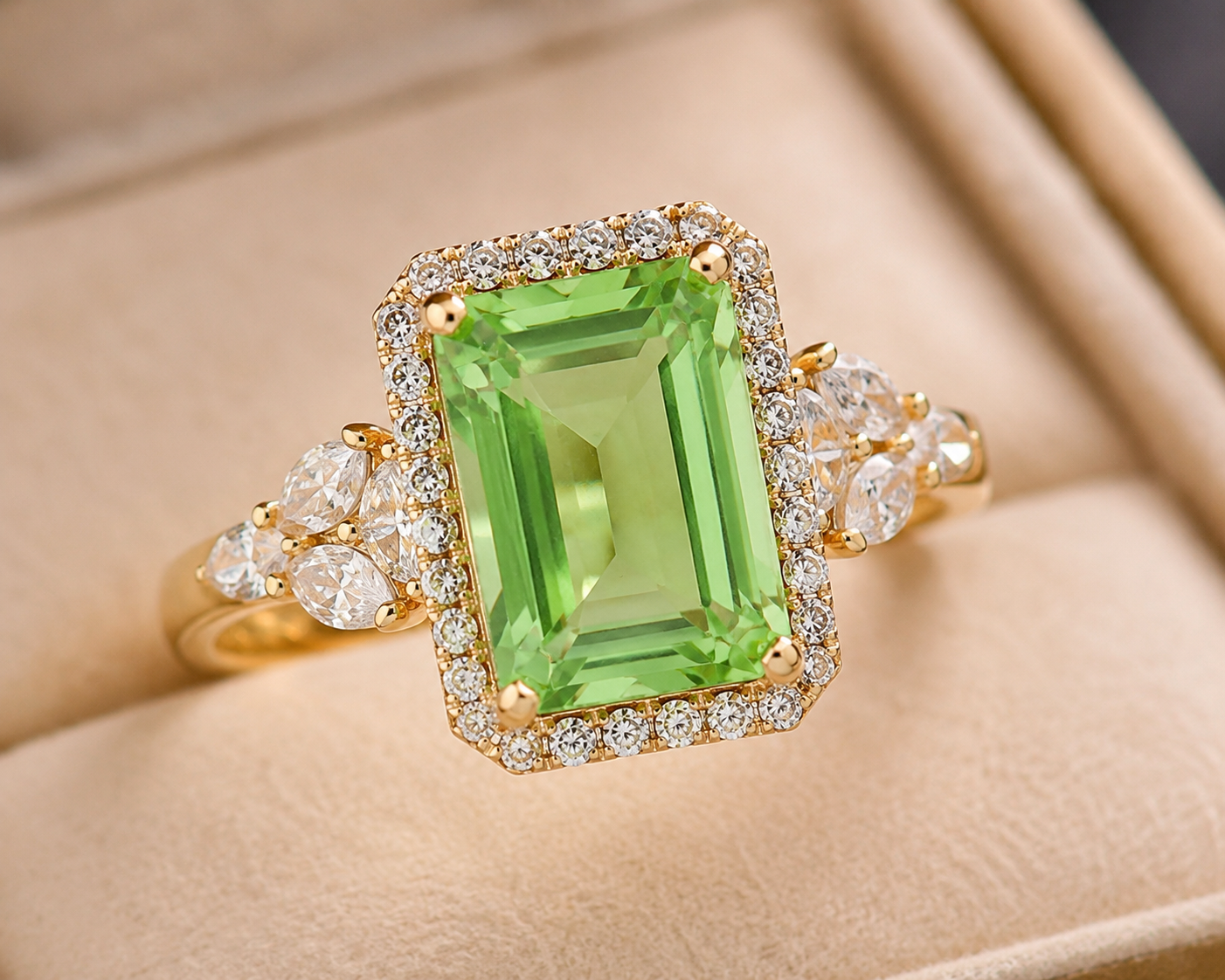
To preserve the beauty of Hiddenite:
- Avoid hard impacts and rough handling.
- Remove jewellery before sports or heavy work.
- Clean using lukewarm water, mild soap, and a soft cloth.
- Avoid ultrasonic or steam cleaners.
- Store separately from harder gemstones like diamonds and sapphires.
Proper care will help maintain its brilliance for many years.
Hiddenite in Gemology
Hiddenite is an excellent gemstone for gemology students because it demonstrates the importance of mineral identification, colour origin, and gemstone grading.
Learning about rare gemstones such as Hiddenite helps aspiring gemologists and jewellery professionals understand the diversity of the gemstone world and develop expertise in gemstone evaluation.
Interesting Facts About Hiddenite
- Hiddenite was named after mineral explorer William Earl Hidden.
- It is one of the rarest green gemstones in the world.
- Hiddenite is the green variety of spodumene, while Kunzite is the pink-to-lilac variety of the same mineral.
- Large, high-quality Hiddenite crystals are extremely uncommon.
- The gemstone’s vivid green colour is often caused by traces of chromium.
Conclusion
The Hiddenite gemstone is a remarkable example of nature’s artistry. Its vibrant green colour, fascinating origin, and exceptional rarity make it a standout among collector gemstones and fine jewellery materials.
Whether you’re a gemstone enthusiast, a jewellery designer, or a student of gemology, Hiddenite offers a fascinating glimpse into the diversity and beauty of the mineral world. Its scarcity and elegance ensure that it will continue to captivate collectors and jewellery lovers for generations.