
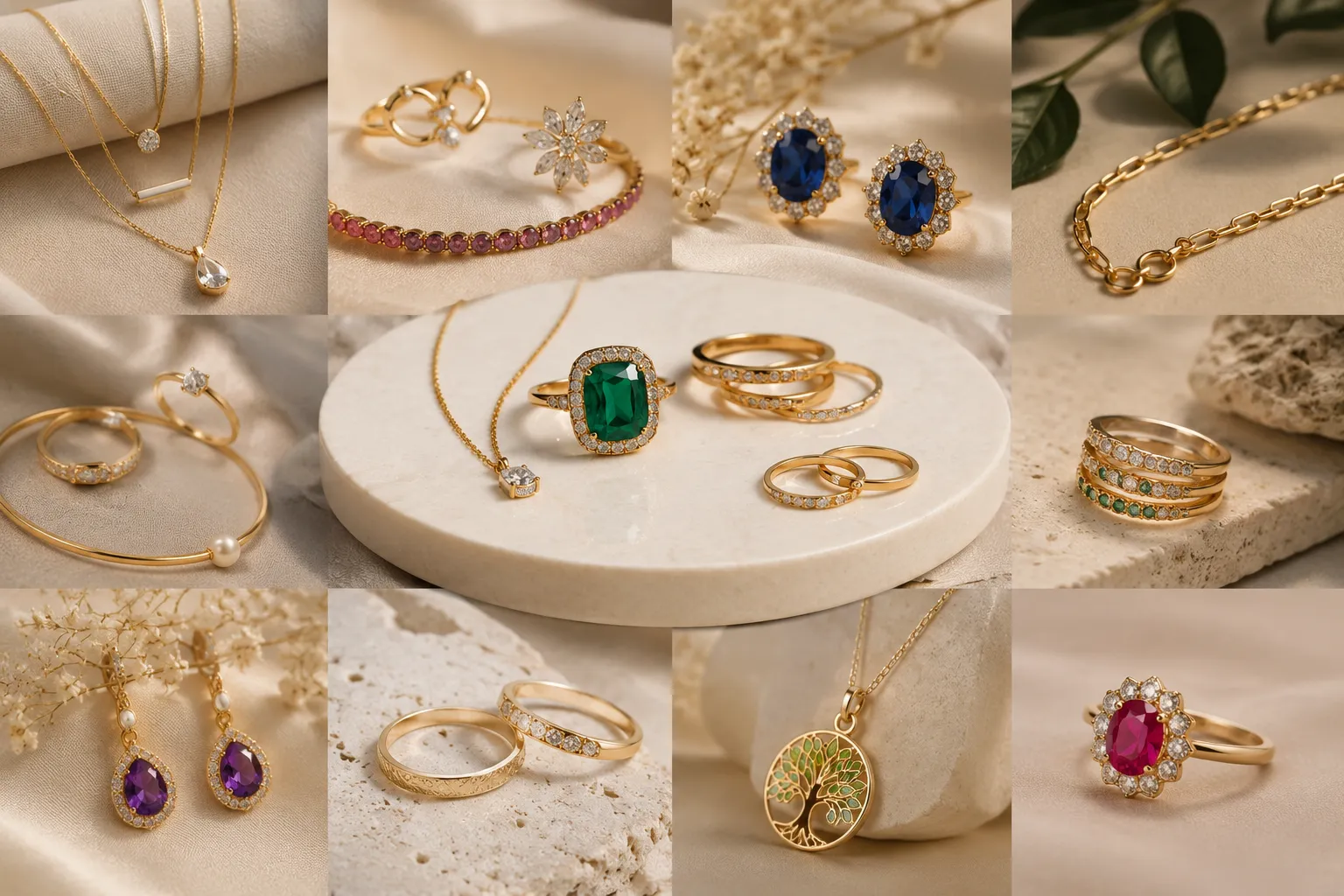
The jewellery industry is constantly evolving, and Jewellery Trends 2026 reflect changing consumer preferences, technology, fashion, and lifestyles. Today, consumers are looking for jewellery that combines individuality, craftsmanship, versatility, and personal expression. From personalised designs and coloured gemstones to sustainable jewellery and innovative technology, several trends are shaping the industry. Let’s explore the key Jewellery Trends 2026 and see how jewellery is evolving this year.
1. Personalised Jewellery Continues to Grow
Personalisation remains one of the strongest trends in modern jewellery.
Instead of choosing designs purely because they are fashionable, customers increasingly want jewellery that has personal meaning.
Popular personalised jewellery includes:
- Name necklaces
- Initial pendants
- Birthstone jewellery
- Engraved rings
- Custom bracelets
- Bespoke wedding jewellery
- Meaningful symbols and motifs
Personalised jewellery allows consumers to combine fashion with their own stories, relationships, and important milestones.
2. Coloured Gemstones Are Taking Centre Stage
Diamonds will always have an important place in jewellery, but coloured gemstones are gaining attention for their individuality and visual appeal.
Emeralds, sapphires, rubies, tourmalines, tanzanite’s, spinel’s, and other gemstones offer designers an extensive range of colours.
Consumers who want something different from traditional diamond jewellery are increasingly attracted to distinctive gemstone designs.
This trend is also creating greater interest in gemstone knowledge, identification, quality, origin, and treatments.
3. Jewellery Is Becoming More Individual
One of the biggest changes in jewellery is the move away from simply following established trends.
Consumers increasingly want jewellery that reflects their personality.
This has encouraged designers to experiment with:
- Unusual shapes
- Asymmetrical designs
- Sculptural forms
- Mixed metals
- Unconventional gemstones
- Personal symbols
- Artistic textures
The result is jewellery that feels more individual and expressive.
4. Minimalist Jewellery Remains Strong
While statement jewellery attracts attention, minimalist jewellery continues to be popular.
Simple chains, delicate rings, small earrings, and understated pendants work particularly well for everyday wear.
Minimalist jewellery is versatile because individual pieces can be worn alone or combined with other jewellery.
This has also contributed to the popularity of layering and stacking.
5. Jewellery Layering and Stacking Continue to Influence Styling
Instead of wearing a single necklace, ring, or bracelet, many consumers combine multiple pieces to create a personalised look.
Popular combinations include:
- Layered necklaces
- Stacked rings
- Multiple bracelets
- Mixed-size earrings
- Multiple pendants
Layering gives consumers greater freedom to experiment with their jewellery without needing to purchase a single elaborate statement piece.
6. Sustainable Jewellery Is Gaining Attention
Sustainability is becoming an increasingly important consideration across the luxury industry, including jewellery.
Consumers are paying greater attention to where materials come from and how jewellery is produced.
This has increased interest in:
- Recycled precious metals
- Responsible sourcing
- Traceable gemstones
- Ethical production
- Sustainable packaging
- Jewellery recycling and redesign
For jewellery businesses, transparency and responsible sourcing can increasingly become important parts of brand identity.
7. Technology Is Transforming Jewellery Design
Technology is changing how jewellery designers develop and manufacture products.
Computer-Aided Design (CAD) allows designers to create detailed digital models before production begins.
Other technologies, including:
- 3D modelling
- 3D printing
- Digital rendering
- Computer-controlled manufacturing
- Advanced casting techniques
are helping designers experiment with increasingly complex forms.
Technology does not replace creativity. Instead, it gives designers new tools for turning ideas into finished jewellery.
8. Traditional Craftsmanship Is Finding New Life
Interestingly, the growth of technology has not made traditional craftsmanship irrelevant.
Techniques such as hand engraving, filigree, enamel work, stone setting, and other specialised crafts continue to attract attention.
Modern designers are increasingly combining traditional techniques with contemporary forms.
This creates jewellery that feels both heritage-inspired and modern.
9. Statement Jewellery Is Returning
Large and expressive jewellery pieces continue to appeal to consumers who want accessories that make an immediate visual impact.
Statement earrings, oversized rings, sculptural necklaces, and bold bracelets can transform a simple outfit.
The modern approach to statement jewellery is not necessarily about excessive decoration. Designers are experimenting with unusual proportions, artistic shapes, textures, and colour combinations.
10. Vintage Inspiration Is Influencing Modern Designs
Vintage and antique jewellery continue to inspire contemporary designers.
Historical motifs, old-world craftsmanship, coloured gemstones, intricate metalwork, and classic silhouettes are being reinterpreted for modern consumers.
This trend also connects with the growing appreciation for jewellery with a sense of history and individuality.
Vintage-inspired jewellery can offer the appearance of a story-rich piece while incorporating modern design and comfort.
11. Modern Bridal Jewellery Is Becoming More Personal
Bridal jewellery is also changing.
While traditional gold jewellery remains important in many markets, modern couples are exploring designs that better reflect their individual style.
Contemporary bridal jewellery may include:
- Coloured gemstones
- Personalised designs
- Modern diamond cuts
- Lightweight jewellery
- Stackable rings
- Contemporary gold designs
- Jewellery that can be worn after the wedding
The emphasis is increasingly shifting toward jewellery that has a life beyond a single occasion.
12. Men’s Jewellery Continues to Expand
Men’s jewellery is becoming a more visible part of the fashion and luxury market.
Popular categories include:
- Rings
- Bracelets
- Chains
- Cufflinks
- Pendants
- Earrings
Designers are experimenting with different metals, textures, gemstones, and proportions to create jewellery that appeals to a wider range of styles.
How Social Media Is Influencing Jewellery Trends
Social media has changed how jewellery trends spread.
Platforms such as Instagram, Pinterest, TikTok, and YouTube allow jewellery designs to reach audiences around the world almost instantly.
A design worn by a celebrity or influencer can quickly attract attention, while jewellery brands can use short-form video to demonstrate:
- Jewellery making
- Gemstone details
- Styling ideas
- Behind-the-scenes craftsmanship
- New collections
- Design processes
This has made visual storytelling an important part of modern jewellery marketing.
What Do These Trends Mean for Jewellery Professionals?
The jewellery industry of 2026 requires professionals who understand more than traditional jewellery techniques.
Modern jewellery professionals can benefit from knowledge of:
- Jewellery design
- Gemology
- CAD
- Manufacturing
- Digital marketing
- Consumer behaviour
- Sustainability
- Jewellery valuation
- Gemstone identification
As the industry evolves, combining technical knowledge with creativity can create valuable career opportunities.
The Future of Jewellery Design
The future of jewellery is likely to be shaped by a combination of technology, craftsmanship, personalisation, and responsible practices.
Designers are no longer limited to traditional methods. Digital tools allow them to experiment with new forms, while traditional craftsmanship provides the skill and character that make jewellery feel unique.
At the same time, consumers are becoming more informed and increasingly interested in the story behind the jewellery they purchase.
This means successful jewellery brands will need to focus not only on appearance but also on quality, authenticity, craftsmanship, and meaningful design.
Conclusion
The jewellery trends of 2026 reflect a market that is becoming more individual, creative, technology-driven, and conscious.
Personalised jewellery, coloured gemstones, minimalist styling, statement pieces, sustainable practices, CAD technology, traditional craftsmanship, and modern bridal designs are all contributing to the changing jewellery landscape.
For jewellery designers, manufacturers, retailers, and aspiring professionals, understanding these trends can provide valuable insight into where the industry is heading.
The future of jewellery isn’t about choosing between tradition and innovation. It is about bringing both together to create jewellery that feels meaningful, beautiful, and relevant.
FAQ
What are the biggest jewellery trends in 2026?
Some major trends include personalised jewellery, coloured gemstones, minimalist designs, layering and stacking, sustainable practices, statement jewellery, vintage-inspired designs, and technology-driven jewellery creation.
Are coloured gemstones trending in 2026?
Coloured gemstones continue to attract attention because they offer distinctive colours and allow consumers to create more individual jewellery styles.
Is personalised jewellery still popular?
Yes. Personalised jewellery remains popular because it allows customers to express identity, relationships, memories, and personal milestones.
How is technology changing jewellery design?
CAD, 3D modelling, digital rendering, and modern manufacturing technologies allow designers to visualise and develop complex jewellery designs before production.
Is sustainable jewellery becoming more important?
Sustainability and responsible sourcing are becoming increasingly important considerations for jewellery businesses and consumers.
What skills will jewellery professionals need in the future?
A combination of jewellery design, gemology, CAD, manufacturing knowledge, technology, communication, and an understanding of consumer trends can be valuable for modern jewellery professionals.