
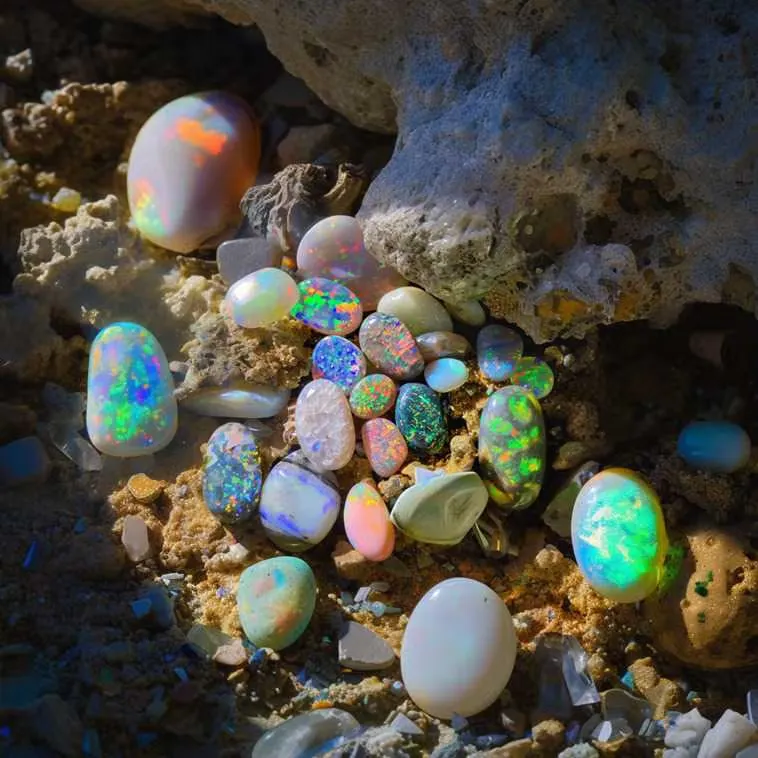
Among the world’s most fascinating gemstones, the opal gemstone holds a special place because of its extraordinary play of colours. Unlike any other gemstone, opal can display a beautiful spectrum of shades that change with light and movement, making every stone completely unique.
Known as the “Queen of Gemstones”, opal has been admired for centuries for its mysterious beauty, rarity, and symbolic significance. From ancient civilizations to modern jewellery designs, opal continues to inspire gemstone lovers, designers, and collectors around the world.
What Is an Opal Gemstone?
Opal is a precious gemstone formed from silica and water over millions of years. It is a hydrated amorphous form of silica, meaning it does not have a crystal structure like diamonds, rubies, or sapphires.
The most attractive feature of an opal gemstone is its play-of-colour — a stunning optical effect where the stone reflects different colours such as blue, green, yellow, orange, pink, and red when viewed from different angles.
This natural colour display makes every opal gemstone one-of-a-kind.
The Unique Colours of Opal Gemstone
The beauty of an opal lies in its incredible colour variations. Some opals show soft pastel tones, while others display bright flashes of rainbow colours.
Common colours found in opals include:
- Blue Opal: Known for its calm and elegant appearance.
- White Opal: A classic variety with a light body colour and colourful flashes.
- Black Opal: One of the rarest and most valuable types, featuring vibrant colours against a dark background.
- Fire Opal: Famous for its warm orange, red, and yellow shades.
- Pink Opal: Loved for its soft and romantic appearance.
- Green Opal: Appreciated for its natural earthy beauty.
The combination of colour, brightness, pattern, and rarity determines the value of an opal gemstone.
How Is Opal Formed?
Opal formation is a slow natural process that takes millions of years. When water containing dissolved silica moves through cracks and spaces in rocks, silica deposits are left behind as the water evaporates.
Over time, these silica deposits develop into opal gemstones.
The microscopic arrangement of silica particles creates the beautiful play-of-colour effect that makes opal so special.
Types of Opal Gemstones
1. Precious Opal
Precious opal is the most valuable variety because it displays a beautiful play-of-colour. It is widely used in luxury jewellery due to its rarity and visual appeal.
2. Common Opal
Common opal does not show a strong play-of-colour but is available in many attractive shades and is often used for decorative jewellery.
3. Black Opal
Black opal is considered one of the rarest and most valuable opals. Its dark body tone enhances the brightness of its colourful flashes.
4. Fire Opal
Fire opal is recognized for its fiery shades of orange, red, and yellow. Some varieties may also display colour flashes.
5. Boulder Opal
Boulder opal forms naturally with the host rock attached, creating unique patterns and designs.
Where Are Opal Gemstones Found?
Australia is the world’s most famous source of opal and is known for producing some of the finest quality stones. Important opal mining regions include:
- Lightning Ridge, Australia – Famous for rare black opals
- Coober Pedy, Australia – Known for white opals
- Queensland, Australia – Famous for boulder opals
Opals are also found in countries such as Ethiopia, Mexico, Brazil, and the United States.
Opal Gemstone in Jewellery
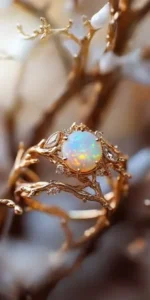
The unique appearance of opal makes it a popular choice for creating elegant jewellery pieces. It is commonly used in:
- Opal rings
- Opal necklaces
- Earrings
- Bracelets
- Designer jewellery collections
Jewellery designers love opals because no two stones have exactly the same colour patterns, allowing them to create exclusive and artistic designs.
Symbolism and Meaning of Opal
Throughout history, opal has been associated with creativity, inspiration, and imagination. Many cultures consider opal a gemstone that represents:
- Creativity
- Hope
- Confidence
- Emotional balance
- Individuality
Because of its connection with artistic expression, opal is often appreciated by creative professionals and jewellery designers.
How to Care for an Opal Gemstone
Opal is a relatively delicate gemstone and requires proper care to maintain its beauty.
Tips for caring for opal jewellery:
- Avoid exposing opal to extreme heat or sudden temperature changes.
- Keep it away from harsh chemicals and cleaning solutions.
- Store opal jewellery separately to prevent scratches.
- Clean gently using a soft cloth and mild soap.
With proper care, an opal gemstone can remain beautiful for generations.
Why Is Opal Popular Among Jewellery Lovers?
The popularity of opal comes from its uniqueness. Unlike gemstones that are valued mainly for a single colour, opal offers a constantly changing visual experience.
Its:
- Rare colour patterns
- Natural beauty
- Individual character
- Artistic appeal
make it one of the most admired gemstones in the jewellery world.
Career Opportunities in Gemstone Knowledge
Understanding gemstones like opal is an important skill for professionals in the jewellery industry. Knowledge of gemstone identification, grading, and valuation helps jewellery designers, gemologists, and entrepreneurs build successful careers.
Professional jewellery education provides students with practical knowledge about gemstones, jewellery designing, manufacturing, and evaluation.
Conclusion
The opal gemstone is truly one of nature’s most magical creations. With its fascinating colours, unique patterns, and rich history, opal continues to capture the imagination of jewellery lovers worldwide.
Whether used in luxury jewellery or studied by gemstone professionals, opal represents creativity, beauty, and the endless possibilities of the gemstone world.