
Jewellery is more than just an accessory it is a form of art, expression, and craftsmanship. Some jewellery pieces become timeless classics, admired for generations and recognized worldwide. But have you ever wondered how jewellery designers create iconic designs?
Behind every memorable piece lies a combination of creativity, technical expertise, market research, and innovation. Understanding this process can help aspiring designers appreciate the skills required to succeed in the jewellery industry.
What Makes a Jewellery Design Iconic?
An iconic jewellery design is one that remains relevant and desirable over time. These pieces often combine:
- Unique creativity
- Exceptional craftsmanship
- Cultural significance
- Timeless appeal
- Innovative design concepts
Iconic designs tell a story and create an emotional connection with the wearer.
Step 1: Finding Inspiration
Every great jewellery design begins with inspiration.
Designers often draw ideas from:
- Nature
- Architecture
- Art and culture
- Fashion trends
- Historical jewellery
- Personal experiences
Inspiration serves as the foundation for developing unique concepts and collections.
Step 2: Research and Trend Analysis
Before creating a design, jewellery designers study:
- Consumer preferences
- Fashion trends
- Market demands
- Emerging materials
- Industry innovations
Research helps designers develop pieces that are both creative and commercially successful.
Step 3: Concept Development
Once inspiration and research are complete, designers begin developing ideas.
This stage involves:
- Brainstorming
- Mood boards
- Design themes
- Material selection
- Collection planning
Concept development helps transform abstract ideas into structured design directions.
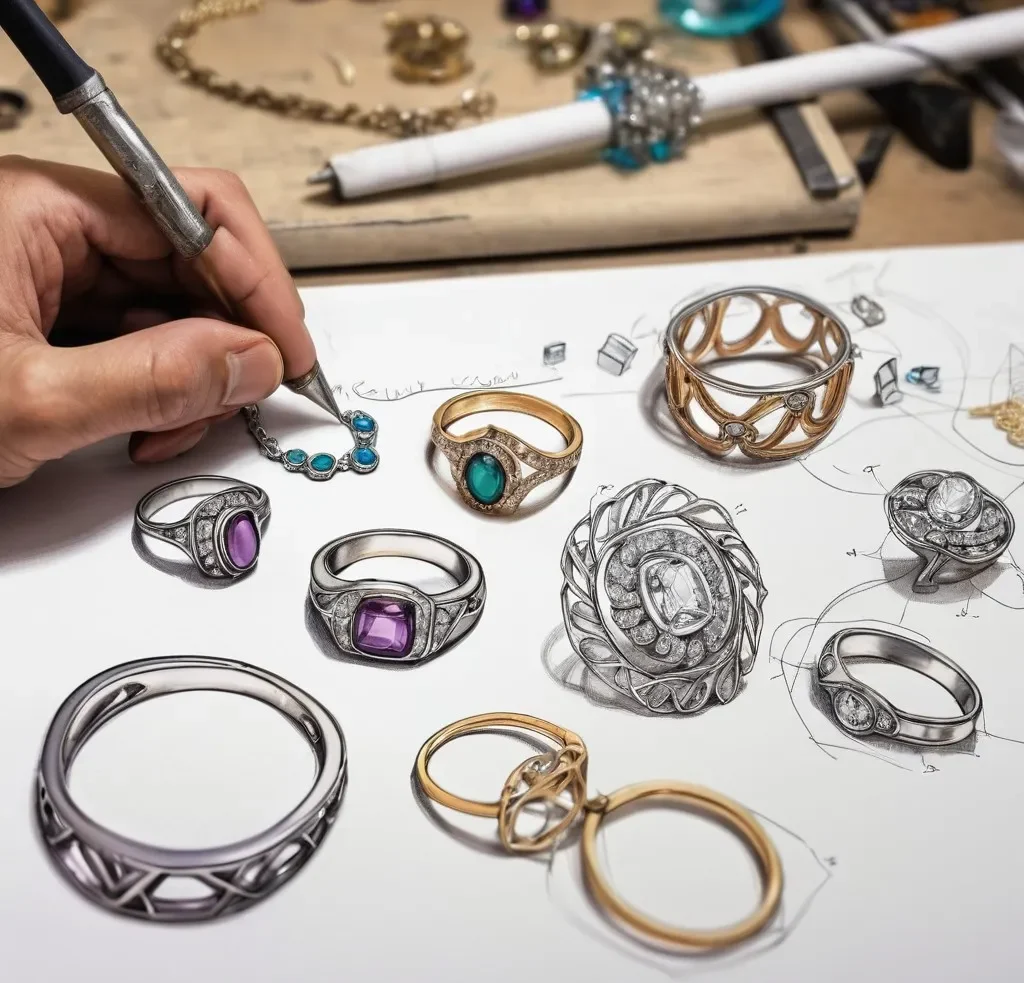
Step 4: Sketching the Design
Sketching is one of the most important stages in jewellery design.
Designers create detailed drawings to visualize:
- Shape
- Structure
- Gemstone placement
- Dimensions
- Design details
Sketches allow designers to refine their ideas before production begins.
Step 5: Selecting Gemstones and Materials
The choice of materials significantly influences the final design.
Designers carefully consider:
- Diamonds
- Gemstones
- Gold
- Silver
- Platinum
- Alternative materials
Material selection affects aesthetics, durability, and market value.
Step 6: Using CAD Technology
Modern jewellery design increasingly relies on CAD (Computer-Aided Design) software.
CAD enables designers to:
- Create detailed 3D models
- Visualize designs accurately
- Make design modifications
- Improve production efficiency
Technology has become an essential part of the modern jewellery design process.
Step 7: Creating Prototypes
Before final production, prototypes are developed to evaluate:
- Appearance
- Comfort
- Proportions
- Functionality
This stage helps identify improvements and ensure the design meets expectations.
Step 8: Refining the Design
Professional designers continuously refine their work.
They evaluate:
- Balance
- Wearability
- Aesthetic appeal
- Manufacturing feasibility
Attention to detail often distinguishes iconic designs from ordinary ones.
The Skills Behind Iconic Jewellery Designs
Successful jewellery designers possess a combination of:
Creativity
The ability to develop original ideas.
Technical Knowledge
Understanding materials, gemstones, and manufacturing processes.
Design Skills
Strong sketching and visualization abilities.
Problem-Solving
Finding creative solutions during the design process.
Trend Awareness
Understanding changing consumer preferences and market demands.
Learn Jewellery Design at Institute of Gems and Jewellery
For students interested in learning how create iconic designs, professional education provides the ideal foundation.
At Institute of Gems and Jewellery, our Jewellery Design programs combine creativity, technical training, and practical experience to prepare students for careers in the jewellery industry.
Students gain knowledge in:
- Jewellery design principles
- Sketching techniques
- Gemstone applications
- CAD jewellery design
- Design development
- Industry practices
Through hands-on learning and expert guidance, students develop the skills needed to create innovative and impactful jewellery designs.
Career Opportunities in Jewellery Design
A professional jewellery design education can lead to careers such as:
- Jewellery Designer
- CAD Designer
- Product Development Designer
- Design Consultant
- Jewellery Entrepreneur
- Creative Director
As the jewellery industry continues to evolve, demand for skilled designers remains strong.
Conclusion
Understanding the concept reveals the blend of creativity, research, craftsmanship, and technology involved in the process. From initial inspiration to final production, every stage plays an important role in transforming ideas into timeless jewellery pieces.
For aspiring designers, professional training and practical experience are key steps toward building a successful career in jewellery design.