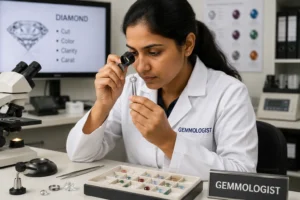
The gems and jewellery industry relies on skilled professionals to identify, evaluate, and authenticate gemstones. One of the most important experts in this field is a gemologist. If you’ve ever wondered what does a gemologist do, this guide explains their responsibilities, skills, career opportunities, and how to become one.
Whether you’re a student exploring career options after +2 or someone passionate about gemstones, understanding the role of a gemologist can help you decide if this exciting profession is right for you.
Who Is a Gemologist?
A gemologist is a trained professional who studies, identifies, grades, and evaluates gemstones. They use specialized tools and scientific techniques to determine a gemstone’s authenticity, quality, and value.
Gemologists work with a wide variety of precious and semi-precious stones, including diamonds, rubies, sapphires, emeralds, and many others.
What Does a Gemologist Do?
The primary responsibility of a gemologist is to examine gemstones and provide accurate information about their characteristics and value.
1. Identifying Gemstones
One of the most important tasks of a gemologist is identifying different types of gemstones. They analyse physical and optical properties to determine whether a stone is natural, synthetic, treated, or imitation.
2. Grading Diamonds and Gemstones
Gemologists assess the quality of gemstones using established grading standards. For diamonds, this includes evaluating:
- Cut
- Color
- Clarity
- Carat Weight
These factors significantly influence a diamond’s value and market demand.
3. Detecting Treatments and Enhancements
Many gemstones undergo treatments to improve their appearance. A gemologist can identify enhancements such as:
- Heat treatment
- Fracture filling
- Dyeing
- Irradiation
This helps ensure transparency and consumer confidence.
4. Appraising Gemstone Value
Gemologists estimate the market value of gemstones based on quality, rarity, size, and current market trends.
Their assessments are often used for:
- Insurance purposes
- Jewellery sales
- Estate valuations
- Auctions
5. Issuing Gemstone Reports
Professional gemologists prepare detailed reports that describe a gemstone’s characteristics and grading results.
These reports help buyers and sellers make informed decisions.
6. Supporting Jewellery Manufacturing
Gemologists often work alongside jewellery designers and manufacturers to select appropriate gemstones for various jewellery collections.
Skills Required to Become a Gemologist
A successful gemologist should possess:
Attention to Detail
Even minor inclusions or color variations can affect a gemstone’s value.
Analytical Skills
Gemologists use scientific methods to identify and evaluate gemstones.
Technical Knowledge
Understanding gemstone properties, treatments, and grading systems is essential.
Communication Skills
Gemologists must explain technical information clearly to clients and industry professionals.
Passion for Gemstones
A genuine interest in gemstones and jewellery helps professionals excel in this field.
Tools Used by Gemologists
Gemologists rely on specialized equipment, including:
* Microscope
* Loupe
* Refractometer
* Polariscope
* Spectroscope
* Diamond Tester
* UV Light Equipment
These tools help accurately identify and evaluate gemstones.
Where Do Gemologists Work?
Gemologists have opportunities in various sectors of the gems and jewellery industry.
Jewellery Retail Stores
Many jewellery brands employ gemologists to evaluate and certify gemstones.
Gem Testing Laboratories
Professional laboratories require gemologists to perform gemstone analysis and grading.
Jewellery Manufacturing Companies
Manufacturers depend on gemologists for gemstone selection and quality control.
Auction Houses
Gemologists assess valuable gemstones and jewellery before auctions.
Independent Consulting
Experienced professionals may work as independent gemstone consultants and appraisers.
How to Become a Gemologist
If you’re interested in becoming a gemologist, follow these steps:
Step 1: Complete Your Higher Secondary Education
Students from any stream can pursue gemology after +2.
Step 2: Enrol in a Gemology Course
A professional gemology program provides training in:
* Gemstone identification
* Diamond grading
* Gem testing techniques
* Industry standards
At Institute of Gems and Jewellery, our Gemmology Course is designed to equip students with the practical and theoretical knowledge required by today’s gems and jewellery industry. Students receive hands-on training in gemstone identification, diamond grading, gem testing instruments, and industry-standard evaluation techniques.
Step 3: Gain Practical Experience
Hands-on training helps students develop confidence and technical expertise.
Step 4: Obtain Certification
Professional certification enhances credibility and improves career opportunities.
Career Opportunities for Gemologists
Graduates of professional gemmology programs, such as those offered by Institute of Gems and Jewellery, can explore opportunities in jewellery retail, gem testing laboratories, diamond grading canters, manufacturing companies, and independent gemstone consulting.
Popular career options include:
* Gemologist
* Diamond Grader
* Gemstone Appraiser
* Jewellery Consultant
* Quality Control Specialist
* Laboratory Technician
* Jewellery Buyer
* Gemstone Trader
Is Gemology a Good Career?
Yes. Gemology offers a unique combination of science, luxury, and creativity. With the growth of the global gems and jewellery market, skilled professionals are increasingly sought after by retailers, manufacturers, and laboratories.
For students interested in gemstones, jewellery, and quality assessment, gemology can provide rewarding long-term career opportunities.
Conclusion
Understanding what does a gemologist do helps reveal the critical role these professionals play in the gems and jewellery industry. From identifying gemstones and grading diamonds to determining value and authenticity, gemologists ensure quality and trust throughout the jewellery supply chain.
If you’re passionate about gemstones and looking for a specialized career after +2, a professional gemology course can be an excellent first step toward entering this fascinating industry.