
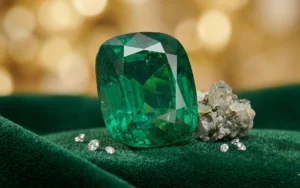
Emerald, with its mesmerizing green hue and timeless beauty, has captivated hearts for centuries. Known as the birth stone of the month for May, emerald is one of the most treasured gemstones in the world. From royal jewellery collections to modern fashion pieces, this stunning green gem continues to symbolize elegance, luxury, and emotional depth.
But emerald is much more than just a beautiful gemstone. It carries a rich history, deep symbolism, and fascinating characteristics that make it unique in the world of gemstones. In this blog, let’s explore everything about the birth stone of the month emerald its meaning, history, symbolism, healing beliefs, quality factors, and why it remains a favourite among gemstone lovers.
What is Emerald?
Emerald is a precious gemstone belonging to the beryl mineral family, the same family as aquamarine and morganite. What makes emerald special is its distinctive rich green colour, which comes from trace amounts of chromium, vanadium, and sometimes iron.
The word “emerald” comes from the Greek word smaragdos, meaning green stone. Its lush green colour is often associated with nature, renewal, and life itself.
Emerald is considered one of the four precious gemstones, alongside diamond, ruby, and sapphire. Its rarity, beauty, and historical significance place it among the most valuable gems in the world.
Birth Stone of the Month Emerald: Why is Emerald May’s Birthstone?
Emerald is recognized as the official birthstone for May. The vibrant green gemstone perfectly matches the spirit of spring a season associated with growth, renewal, prosperity, and fresh beginnings.
People born in May are believed to share qualities symbolized by emerald, including:
- Compassion
- Wisdom
- Patience
- Emotional balance
- Growth and harmony
Because of these symbolic meanings, emerald jewellery is considered a thoughtful and meaningful gift for May-born individuals.
History of Emerald
Emerald has a fascinating history that dates back thousands of years. Ancient civilizations treasured emerald not only for its beauty but also for its spiritual and protective powers.
Ancient Egypt and Cleopatra Emerald
was especially loved by Cleopatra, the famous queen of Egypt. She was known for her passion for emerald gemstones and even owned emerald mines in Egypt. Cleopatra used emeralds in jewellery, royal decorations, and gifts.
The ancient Egyptians believed emerald symbolized:
- Fertility
- Eternal youth
- Protection
- Rebirth
Emeralds were often buried with pharaohs because they believed the gemstone would offer protection in the afterlife.
Roman Beliefs
The Romans associated emerald with Venus, the goddess of love and beauty. They believed emerald could soothe the eyes and calm the mind.
Roman scholar Pliny the Elder famously wrote that nothing was greener or more pleasing to the eye than emerald.
Emerald in Royal Jewellery
Throughout history, emerald has been worn by kings, queens, and royals across Europe, India, and South America. The gemstone became a symbol of wealth, power, and prestige.
Today, emerald remains a favourite in royal jewellery collections and luxury gemstone designs.
Symbolism and Meaning of Emerald
The birth stone of the month emerald carries deep symbolic meanings that go beyond beauty.
Love and Loyalty
Emerald is often called the stone of successful love. It is believed to strengthen relationships, encourage loyalty, and promote emotional understanding.
This is why emerald jewellery is often gifted on anniversaries and special romantic occasions.
Wisdom and Intelligence
Ancient cultures believed emerald could enhance:
- Mental clarity
- Wisdom
- Intuition
- Focus
Scholars and philosophers valued emerald for its connection to intelligence and insight.
Renewal and Growth
Because of its green colour, emerald symbolizes:
- Nature
- New beginnings
- Healing
- Prosperity
- Personal growth
This makes emerald a gemstone associated with positive transformation.
Emerald’s Beautiful Green Colour
One of the most captivating things about emerald is its green colour. Unlike other green gemstones, emerald has a unique richness and depth that is instantly recognizable.
Emerald colours can range from:
- Light green
- Yellowish green
- Bluish green
- Deep vivid green
The most valuable emeralds have a rich, vivid green colour with good saturation and even tone.
In gemstone grading, colour is the most important factor for emerald value.
Where Are Emeralds Found?

Emeralds are mined in several countries around the world, but some sources are more famous than others.
Colombia
Colombia is considered the most famous source of emeralds. Colombian emeralds are known for their:
- Rich green colour
- High quality
- Exceptional clarity (for emerald standards)
These are among the most valuable emeralds in the market.
Zambia
Zambian emeralds often have:
- Slight bluish-green tones
- Good transparency
- Strong durability
They are highly popular in modern jewellery.
Brazil
Brazil produces emeralds in a variety of green shades and sizes.
Other Sources
Emeralds are also found in:
- Afghanistan
- Ethiopia
- Pakistan
- Zimbabwe
- Russia
Each source gives emeralds unique colour characteristics.
The Famous Inclusions of Emerald
Unlike diamonds, emeralds often contain natural internal marks called inclusions. These inclusions are so common in emerald that they are known as the gemstone’s jardin, which means “garden” in French.
These natural inclusions:
- Show the gem is natural
- Give each stone unique character
- Affect value depending on visibility
Perfectly clear emeralds are extremely rare and highly expensive.
How Emerald is Graded
Like other gemstones, emerald quality is judged using gemstone grading factors.
Colour
The most important factor.
Best emeralds have:
- Vivid green
- Even colour
- Strong saturation
Clarity
Emeralds naturally have inclusions, so completely flawless stones are rare.
Clarity is judged based on how visible the inclusions are and whether they affect beauty or durability.
Cut
A good cut enhances emerald’s colour and brilliance.
The famous emerald cut was actually designed specifically for emerald gemstones.
Carat Weight
Larger emeralds are rarer and more valuable, especially if they have excellent colour.
Healing Beliefs and Spiritual Significance of Emerald
Many people believe emerald has spiritual and healing properties, though these beliefs are not scientifically proven.
Emerald is associated with:
Emotional Healing
Believed to promote:
- Inner peace
- Emotional balance
- Calmness
- Compassion
Emerald in Jewellery
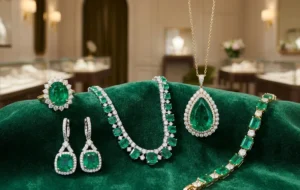
Emerald is widely used in:
- Rings
- Earrings
- Necklaces
- Pendants
- Bracelets
- Bridal jewellery
Its vibrant green colour pairs beautifully with:
- Gold
- White gold
- Platinum
- Diamonds
Emerald and diamond combinations are especially luxurious and elegant.
Famous Emerald Jewellery in History
Emerald has appeared in some of the world’s most iconic jewellery pieces.
Famous emerald jewellery has been worn by:
- Cleopatra
- Royal families
- Hollywood celebrities
- Luxury fashion icons
Emerald tiaras, necklaces, and rings continue to symbolize luxury and elegance.
Why Emerald Remains Timeless
Trends may change, but emerald never goes out of style.
Its enduring popularity comes from:
- Rich green beauty
- Historical significance
- Symbolic meaning
- Luxury appeal
- Rarity
Whether worn as a birthstone, fashion statement, or heirloom piece, emerald always makes an unforgettable impression.
Conclusion
The birth stone of the month emerald is more than just a beautiful green gemstone it is a symbol of love, growth, wisdom, and timeless elegance. With a history that spans ancient civilizations and a beauty that continues to captivate the modern world, emerald remains one of the most cherished gemstones in jewellery.
For May-born individuals, emerald is a meaningful representation of renewal and emotional strength. For gemstone lovers, it is a luxurious treasure filled with colour, history, and symbolism.
Whether gifted in jewellery or admired for its natural beauty, emerald truly deserves its place as one of the world’s most treasured gemstones.