
Margot Robbie has long been admired for her ability to blend classic Hollywood elegance with contemporary fashion sensibility. In January 2026, she reaffirmed that reputation when she appeared at the Wuthering Heights world premiere wearing the legendary Taj Mahal diamond necklace —a jewel whose history spans Mughal India, Old Hollywood romance, and modern global pop culture.
What initially appeared to be a striking red-carpet styling choice soon evolved into a widely discussed cultural moment, drawing attention not only to the necklace’s beauty but also to its layered and complex past.
A Red Carpet Moment That Stopped the Internet

At the Los Angeles premiere of Wuthering Heights, Margot Robbie arrived in a dramatic couture ensemble styled by Andrew Mukamal. While her gown reflected gothic romance in keeping with the film’s tone, it was the historic diamond necklace around her neck that commanded worldwide attention.
The necklace—instantly recognizable to jewellery historians—sparkled under camera flashes, reconnecting a centuries-old jewel with a modern global audience.
The Origins: A Jewel Born in Mughal India
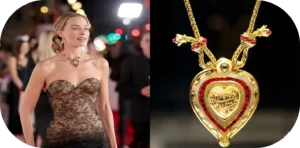
The heart of the necklace is a 17th-century heart-shaped diamond, believed to have originated during the reign of the Mughal Empire. Historical accounts trace the gemstone to Emperor Jahangir, who is said to have gifted it to his wife Nur Jahan, one of the most powerful and influential women of the Mughal court. The diamond bears a Persian inscription widely interpreted as a declaration of eternal love, underscoring its deeply personal origins.
Over time, the jewel became associated with Shah Jahan, Jahangir’s successor, whose enduring love for his wife Mumtaz Mahal led to the construction of the Taj Mahal. This association eventually gave the diamond its widely known name: the Taj Mahal diamond.
From Royal Courts to Cartier Craftsmanship
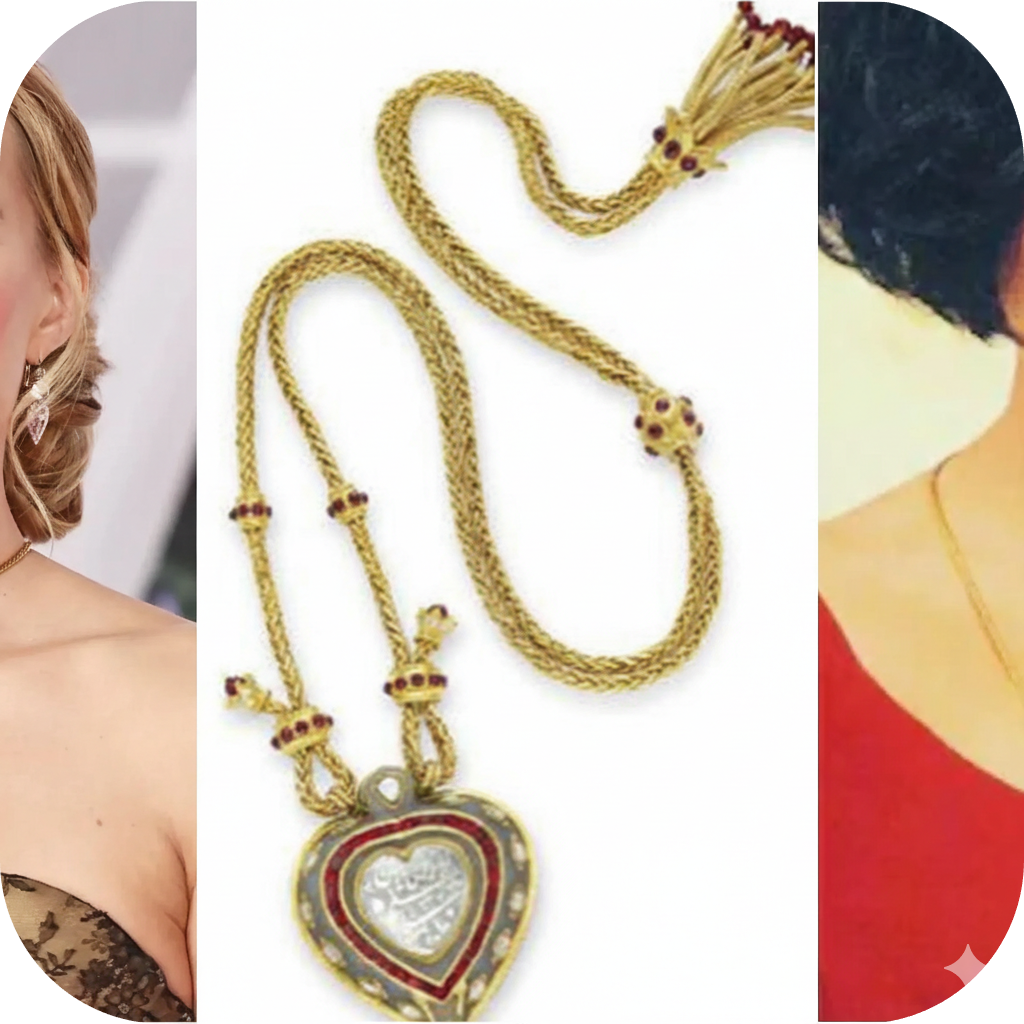
Centuries later, the diamond entered the European luxury world. In the early 1970s, it was acquired by Cartier, which transformed the historic stone into a necklace framed by rubies, gold, and diamonds—carefully balancing modern craftsmanship with reverence for its origin.
In 1972, the necklace entered Hollywood legend when it was gifted to Elizabeth Taylor, one of cinema’s most iconic figures. Taylor wore it frequently, embracing its exotic history and romantic symbolism as part of her famed jewellery collection.
Elizabeth Taylor and the Hollywood Legacy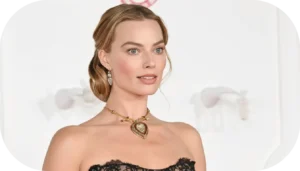
Elizabeth Taylor’s association with the Taj Mahal necklace elevated it from a historic artefact to a pop-culture icon. Known for her love of exceptional jewels, Taylor considered this necklace one of her most meaningful pieces.
After her death, the necklace was auctioned in 2011, fetching approximately $8.8 million, reaffirming its status as one of the most valuable jewels ever linked to Indian royal history.
Timeline Infographic: The Journey of the Taj Mahal Necklace
- Early 1600s – Heart-shaped diamond created during the Mughal Empire; gifted by Emperor Jahangir to Nur Jahan
- Mid-1600s – Associated with Shah Jahan and the legacy of Mumtaz Mahal
- 1971 – Diamond acquired by Cartier and redesigned into a necklace
- 1972 – Gifted to Elizabeth Taylor; becomes a Hollywood icon
- 2011 – Sold at auction for approximately $8.8 million
- January 2026 – Worn by Margot Robbie at the Wuthering Heights world premiere
Cultural Conversations and Global Reactions
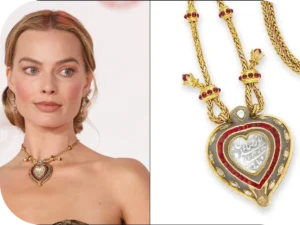
Margot Robbie’s appearance sparked widespread admiration—but also debate. While many praised the styling as a celebration of history and romance, others questioned how jewels with deep non-Western origins are framed in contemporary media narratives.
This dialogue reflects a broader global conversation around heritage, ownership, and storytelling, reminding audiences that jewellery is not merely ornamental—it is historical documentation worn in plain sight.
Why This Moment Matters
Margot Robbie wearing the Taj Mahal necklace was more than a fashion highlight. It represented:
- The endurance of craftsmanship across centuries
- The movement of cultural artefacts through history
- The power of celebrity to reignite interest in heritage jewellery
By placing this jewel back into the global spotlight, Robbie bridged Mughal history, Hollywood glamour, and modern cultural awareness—proving that jewellery can be both beautiful and meaningful.